Thank you! Your submission has been received!
Oops! Something went wrong while submitting the form.
 Rock Run Industries
How a FAB 40 sheet metal fabricator scaled from $36M to $70M+ by bringing real-time visibility to a shop that ran on paper.
1,500–1,800 handwritten job travelers per week with no digital tracking
Fulcrum for job tracking, standardized labeling, rev control, and real-time status visibility
Revenue from $36M to $70M+ while scaling volume without scaling overhead
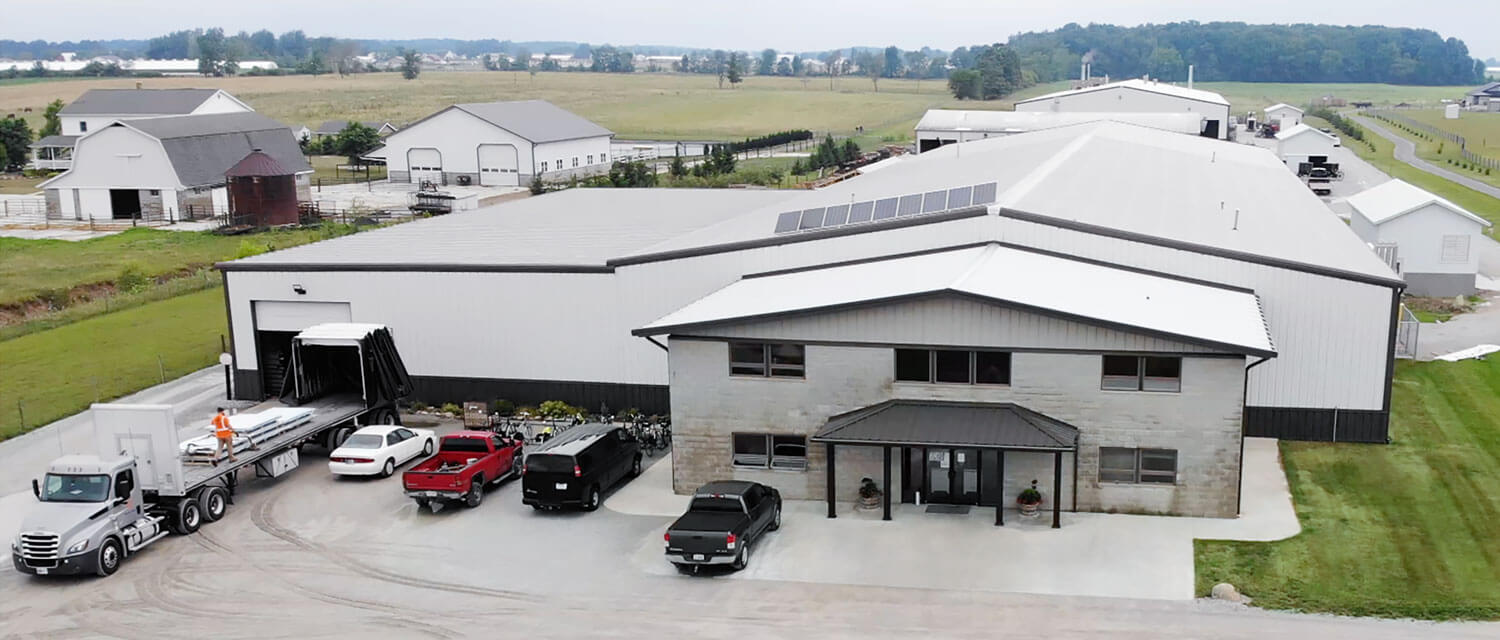
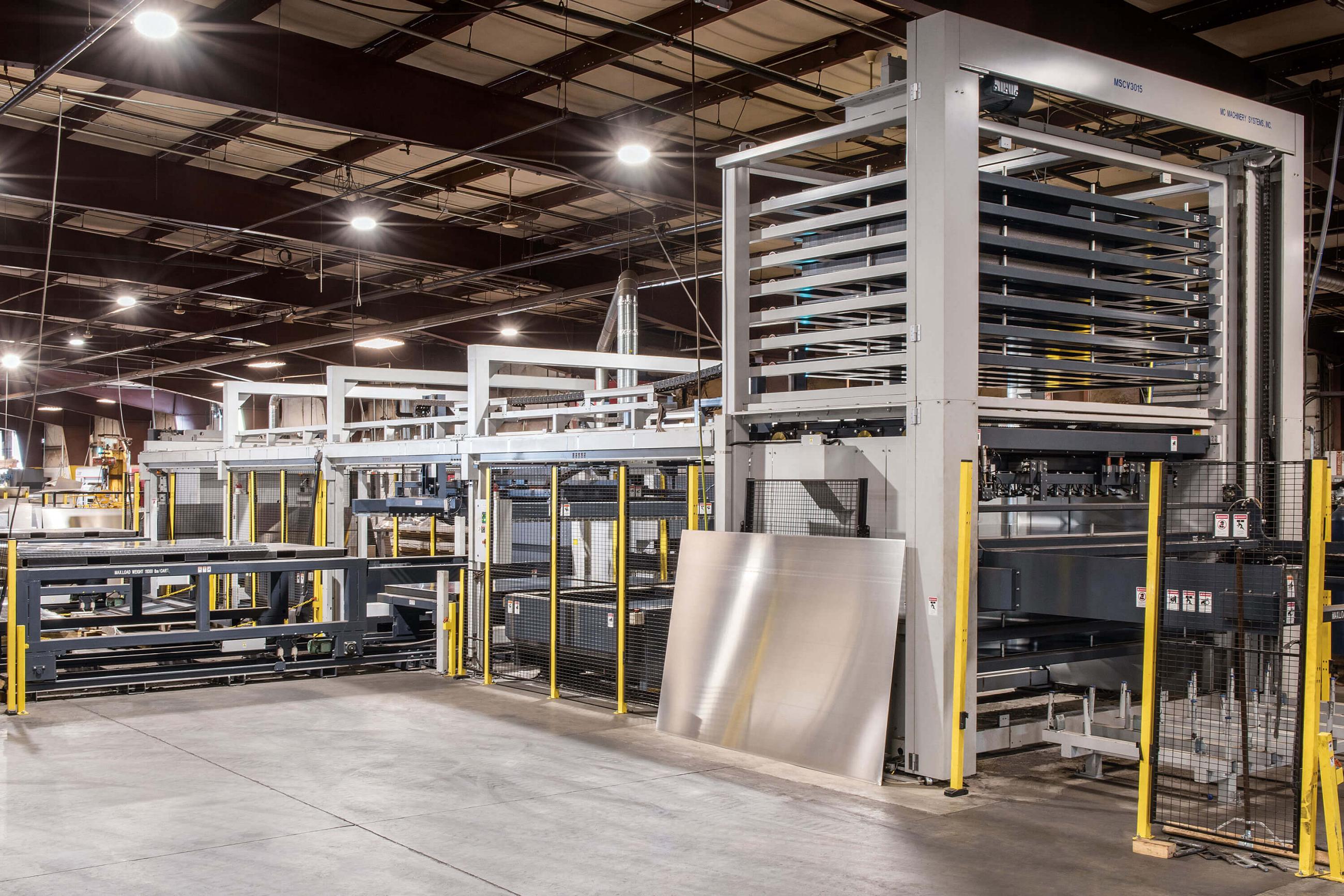
Rock Run Industries is a contract sheet metal and steel fabricator in Northern Indiana, processing 100,000 to 130,000 parts per week across 400 to 450 sales orders. The company appears on the Fabricator's FAB 40 list of the largest fabrication shops in the country.
What sets Rock Run apart from other shops at its scale is the operating philosophy behind it. The company’s mission statement puts the employee first. Not the customer. The employee. The reasoning is direct: customers come back because of great employees, and great employees stay when the environment and compensation reflect that the company values them. This philosophy shapes everything from how Rock Run pays its team to how it makes decisions about technology.
The result is a shop with near-zero turnover, a workforce that trusts management's judgment, and a culture that holds itself accountable. Everyone at Rock Run understands how their work connects to the company's success.
“The employees are first, and that’s for a reason. We all want to make our customers happy. But we realized early that people want to work with us because we’ve got good employees. If we lose the employees, we lose everything else.”
— John Schlabach, Sales Manager
The Challenge
With 400 to 450 sales orders arriving each week and roughly 1,500 to 1,800 jobs moving through the shop, the administrative burden of Rock Run's old system was significant, but it had one critical bottleneck: everything was handwritten.
Production managers wrote every job traveler by hand. Labels on finished parts were handwritten. And because different people wrote those labels differently (e.g. some with part number, quantity, and color, others with just a part number) the shop floor operated on institutional habit more than reliable information.
Tracking a job in progress meant phone calls and physically walking the floor. If a customer called to ask about their order, finding an answer required asking three or four people instead of one. Sales reps in the field had no visibility at all. Quote creation was similarly manual: built in Excel, non-standardized, and painful to update whenever pricing changed across the board.
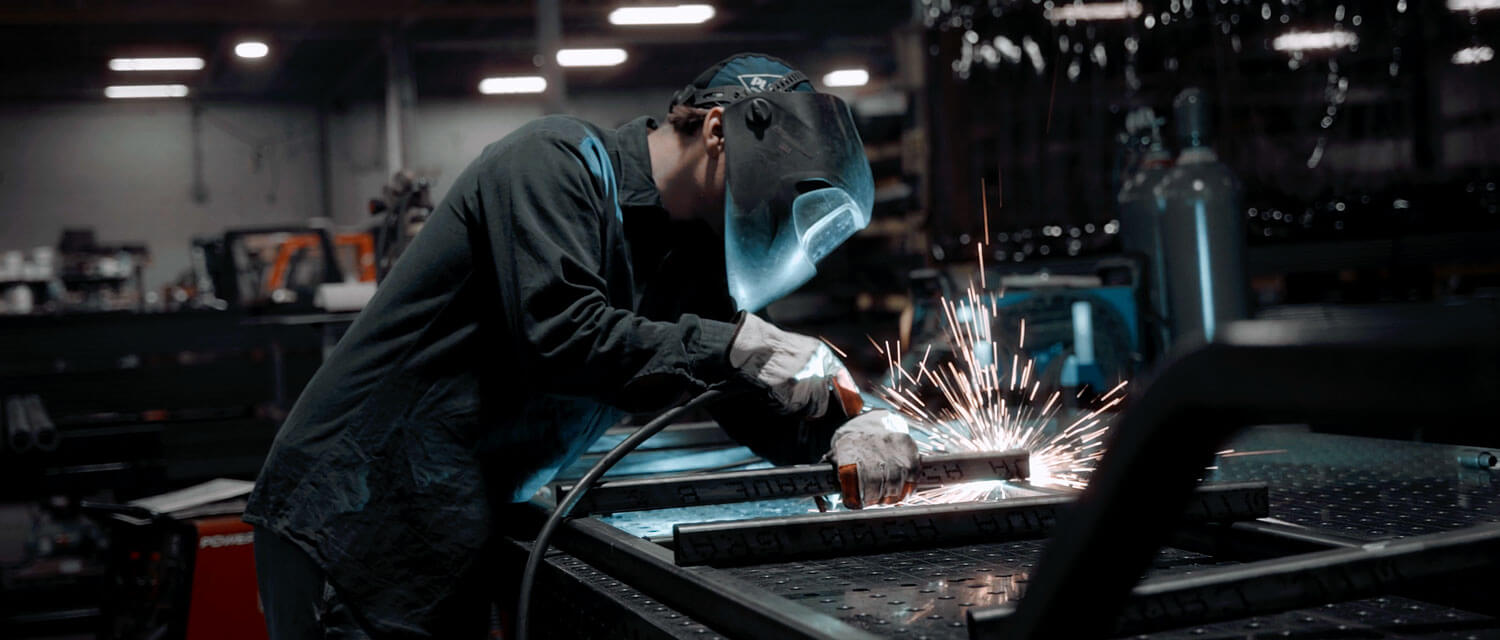
Rock Run runs a piece-rate pay system, which is uncommon; most shops pay hourly. But the underlying dynamic is the same everywhere: floor workers are aware of how their time is spent, and anything that pulls them away from making parts creates friction. At Rock Run, where compensation is directly tied to output, that friction is immediately visible in a paycheck. At an hourly shop, it shows up as slower throughput and scheduling pressure.
That made the technology decision unusually concrete. Rather than treating floor resistance as a change management problem to be managed around, John approached it as a math problem: what does this actually cost the people using it, and what do they get back? It’s a framework that translates directly to any shop, hourly or otherwise, where getting software adopted on the floor is the difference between a successful implementation and an expensive shelf-ware project.
“I was very aware that anything they do that is not actually making parts is, in reality, dragging down their pay. I focused very hard on how this affects the employee because if they benefit, we benefit.”
— John Schlabach
John researched roughly twelve software options, narrowed to three finalists, and brought all three vendors on-site to walk the shop floor. It was one of the decisions he describes as causing the most stress of his career because the stakes of getting it wrong were high.
“I recognized that failing would mean the guys would have a much harder time accepting a second try. I stressed out more about this decision than almost any other.”
— John Schlabach
Fulcrum wasn’t on the original list. John’s team had compiled their twelve candidates through online research, and Fulcrum didn’t surface in those searches. He found Fulcrum at FABTECH in fall 2023, a chance encounter at a trade show that preceded a decision made at year’s end and a go-live in April 2024.
Two qualities set Fulcrum apart. First: ease of use and therefore ease of training. With 1,500–1,800 jobs a week, any software that requires significant interaction overhead per job compounds fast. The finalists John evaluated included options typical for shops at this size like the Epicor Kinetic family. What he was looking for was a system the floor would actually use without a prolonged battle. Second: a sense that Fulcrum would listen and adapt, rather than requiring Rock Run to fit a rigid product mold.
“I could tell pretty quickly that Fulcrum updates constantly and releases those updates constantly. Other companies might iterate, but they release once or twice a year. I also got the sense that if I ask for something, I'm at least going to be listened to. My intuition was right.”
— John Schlabach
The Solution
Before go-live, John ran time studies to calculate the actual cost of new interactions like scanning QR codes, printing labels, and completing jobs in the system. He came up with a number he could put in front of the floor: approximately 48 cents per hour, assuming no gains anywhere else. John knew that floor adoption would require a clear value proposition to communicate to employees.
The gains, of course, materialized. Label printing replaced handwriting, which turned out to be faster and more informative. Job location that once required three or four conversations now required one, or none, since status is visible in the system. Shippers gained clarity on what was done and what wasn't. Sales reps working remotely could answer customer questions without calling the shop.
Rock Run uses Fulcrum's job tracking differently than most manufacturers. Employees don't clock in and clock out by job. Instead, they scan a QR code and mark a job complete, a single checkpoint that captures where a part has been without adding administrative overhead. It's a configuration choice that minimizes floor interaction while still giving the office the real-time status visibility it needs. For a shop as successful as Rock Run where floor time is a premium, the principle is worth stealing: configure the system around what the floor actually needs to do, not around what the software can theoretically track.
A subset of employees has gone further on their own. Without being directed to, some floor workers have begun using Fulcrum's reports to see what's coming next and plan their work accordingly, catching jobs that hadn't been staged yet and flagging them before they cause delays. It's an adoption pattern that emerged organically, driven by the employees themselves seeing the value.
While the primary driver for adopting Fulcrum was eliminating handwritten travelers, one of the clearest operational gains has been in revision control. Communicating when a rev happens, ensuring the right rev reaches the right job, and preventing bad parts from being made on outdated prints. These have all improved measurably since go-live.
The shift to printed, standardized labels has been part of this. A label that carries part number, quantity, color, due date, customer, and PO number replaces a handwritten label that might have had some, none, or all of that depending on who wrote it that day.
Rock Run grew from $36 million in revenue in 2023 to $48 million in 2024 and $63 million in 2025. In 2026 they're projecting north of $70 million. John tracks a parallel metric, revenue per employee, and describes it as moving in a clear direction.
The operational infrastructure Fulcrum provides made it possible to scale orders without a proportional scaling of administrative overhead: standardized job data, real-time status visibility, accurate labeling, and tighter rev control.
Rock Run is currently working toward fully paperless job travelers, planning to eliminate physical travelers entirely, not just replacing handwriting with printing. John is working with the Fulcrum team on how to execute the transition in a way that minimizes new interactions for floor workers while increasing system visibility.
Two other areas are on the roadmap: quality management (as customers increasingly require formal QC documentation) and raw material management, including integration with nesting software. The integration will allow material consumption to be tracked through Fulcrum, turning a currently Excel-managed process into one driven by system data.
“We made great strides with rev control and standardized labeling. The next things are quality and raw material management. We’re not done yet, and we’re working with Fulcrum on all of it.”
— John Schlabach
Rock Run has always strived to be successful. The challenges Rock Run faced before Fulcrum were the problems of a high-growth operation that had scaled past what manual processes could support, and needed infrastructure to match the growing demand and work they were fielding. The region also helps explain their workforce: Northern Indiana is home to roughly 80% of the world's RV manufacturing, which means Rock Run draws from a labor pool that already understands high-output production environments.
What makes Rock Run's approach to technology adoption worth studying is how they treated floor adoption as an operational problem with a measurable answer, not a culture change to be willed into existence. The company's mission statement puts the employee first, and that translates directly into how they evaluated, configured, and rolled out software. Operations leaders at high-revenue shops thinking through a similar transition will find more in common with Rock Run than the pay model might suggest.
The near-zero turnover that results from this culture is one reason knowledge retention hasn’t been a major operational concern at Rock Run. But more relevant to the story: a workforce that trusts management’s decisions is far easier to bring along on a technology transition than one that doesn’t. John didn’t take that trust for granted. He backed it up with numbers. Fulcrum earned it by delivering.