Thank you! Your submission has been received!
Oops! Something went wrong while submitting the form.
 OMW Corporation
How OMW Corporation replaced a decade of manual workarounds with a system built to grow with them.

A hand-updated spreadsheet WIP tracker holding together a shop that had outgrown it
Fulcrum across both sites for job tracking, receiving-level traceability, and lot-level material certs
85%+ on-time delivery held at $30M, with operating margin up three points year over year
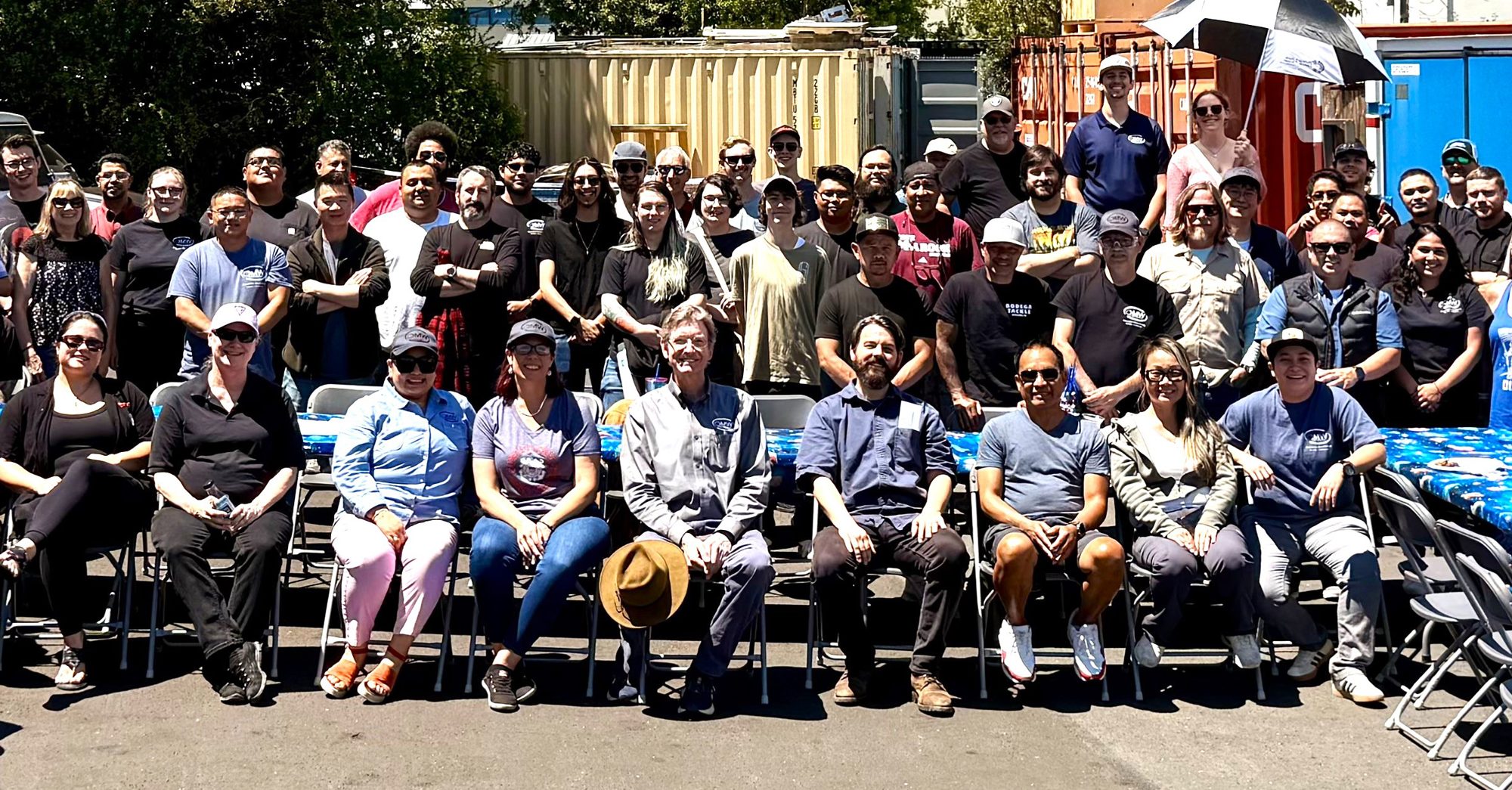
Joe Osborn started this company on a CNC Bridgeport in his garage and grew it into one of the most trusted shops in the aerospace, space, and defense industries. Today OMW Corporation is a precision CNC contract manufacturer with two facilities in Novato and Petaluma, California. AS9100 Rev D certified, ISO 9001:2015 registered, and ITAR compliant, OMW operates in one of the most documentation-intensive and schedule-sensitive sectors in manufacturing.
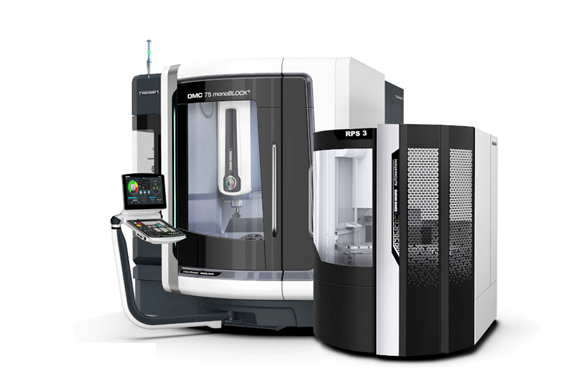
At any given moment, OMW has 350 to 400 active jobs moving through the shop. Their customers include companies building vehicles, satellites, and aerospace systems that are iterating rapidly. OMW has been building its systems to match that standard for years, and is now projecting a third facility by 2028 as demand from the new space sector continues to accelerate.
Interoperability between sites is imperative for OMW to keep up with rising customer demand. OMW needed a software partner that could help them share their finely honed tribal knowledge across sites with ease. They also need to remain agile and be able to pivot at a moment's notice as job specs are continually revised and iterated on by their customers.
“A big thing for me is just how easy it has been to pick up Fulcrum, and learn the flow of how a product moves throughout our production system — just being at a desk and being able to see time frames, dates, when stuff moved, and having access to all that data.”
— Evan Parker, Master Scheduler
Before Fulcrum
OMW had been running on E2 since 2014. By their own account, the implementation was limited: the team used E2 to enter orders, print travelers, generate purchase orders, and sync invoices to QuickBooks. Scheduling, time tracking, and job costing were essentially unused. The system did just enough to get parts on paper.
The gap was covered by people. When a customer called asking about a part, the general manager would walk the floor with a notepad, tracking it down in person. Status updates lived in the heads of the people closest to each job. The shop maintained 80 to 90 percent on-time delivery rates through this period, which is a testament to the team. But it was not a system that could scale.
In 2018, OMW started pulling data out of E2 via API and dumping it into a Google Sheet. People manually updated job statuses as parts moved through operations. It worked, and over time it grew more sophisticated. By around 2020, the system had become an operating layer: shelf locations were tracked by department, rack, and position. Jobs could be located. The team called it the WIP Tracker, and for a shop doing $10M to $15M in revenue, it held.
In 2020 or 2021, OMW's largest customer sent a team to the facility for a week. The visit was about production rates and acceleration. When the conversation arrived at scheduling and job tracking, OMW showed them the WIP Tracker. The vice president of supply chain of their customer's company sat in the conference room and audibly groaned.
“He groaned. It wasn't even a word. Because he saw that our system was highly manual. Later, one of their engineers said: yeah, that is kind of scary. On the other hand, it's really impressive that you're maintaining 85 to 90 percent on-time delivery rates with this.”
— Mike Langston, President & COO
The visit led to a 40% growth rate the following year. That growth made the decision for them: a manual system built for a $10 million company could not run a $30 million one. E2, now merged into JobBoss Squared after an acquisition, had not evolved meaningfully in years. The team needed a platform that was actually being developed to keep pace with their own growth.
“JobBoss Squared was essentially a product from the 1980s with a new user interface slapped on every 10 years. We needed something that wasn't stagnant.”
— Mike Langston, President & COO
OMW did a thorough evaluation before switching, including revisiting their alternatives during contract discussions with Fulcrum. Their conclusion was clear-eyed: no single platform would meet all of their needs. OMW has a sophisticated internal data team, and they expected to continue building dashboards and custom views on top of whatever system they chose.
What they needed from the platform itself was twofold. First, the core operational data had to be reliable, accessible, and structured well enough to build on. Second, the platform had to be actively developed. A system that ships updates continuously is a different kind of partner than one that issues a release once or twice a year.
“We can't have partners who are creaky. We can't have partners who aren't going to grow with us. One of the things I really appreciate about Fulcrum is that you're moving maybe faster than we are. That's what we want.”
— Mike Langston, President & COO
The ease of job setup was also a factor. In E2, getting a job into a ready state for the production floor required navigating back and forth across multiple menus. The interconnected structure of the new system, where routings and job details inherit from the item level, reduced that overhead meaningfully.
The Solution
Ninety-five percent of what OMW ships requires documentation. For a shop doing aerospace and space work, that means tracking materials, outside processing, lot numbers, adhesives, and hardware all the way through to the final documentation package.
The receiving process is where that chain starts. When parts return from anodizing, the certificate of compliance is scanned and attached to the job at receiving. A documentation team member reviews and approves it within 24 hours. By the time the job reaches the documentation step, the cert is already there, already approved, and already in digital form.
“In the old days, we'd have a paper copy in a manila folder. The documentation person would have to go find the folder, find the cert, scan it. Now the receiving event creates the record. When we get to documentation, it's done.”
— Mike Langston, President & COO
The same principle applies to assembly documentation. When an operation requires an adhesive or a keyed insert with lot traceability, the operator photographs the materials at the workstation using a shop tablet and attaches the image directly to the job. The documentation team pulls from the job record rather than hunting through a paper traveler that has been through the shop floor.
“We used to hand-write it on an eight-page traveler that had been through the whole shop. It had oil on it, coolant on it, was torn. Maybe legible, maybe not. Now it's in the job record and it's done.”
— Mike Langston, President & COO
Fulcrum also changed how the shop floor communicates. Every machine at OMW has a tablet where workers log in for job tracking. When a worker needs clarification from planning or scheduling, they message directly from the machine — no need to leave their station, no work interrupted.
“Instead of having to go and hunt us down and leave their machine, they can send us a message right there and get the information they need without stopping work. If we need to come to them, we will, but they never have to leave that machine.”
— Evan Parker, Master Scheduler
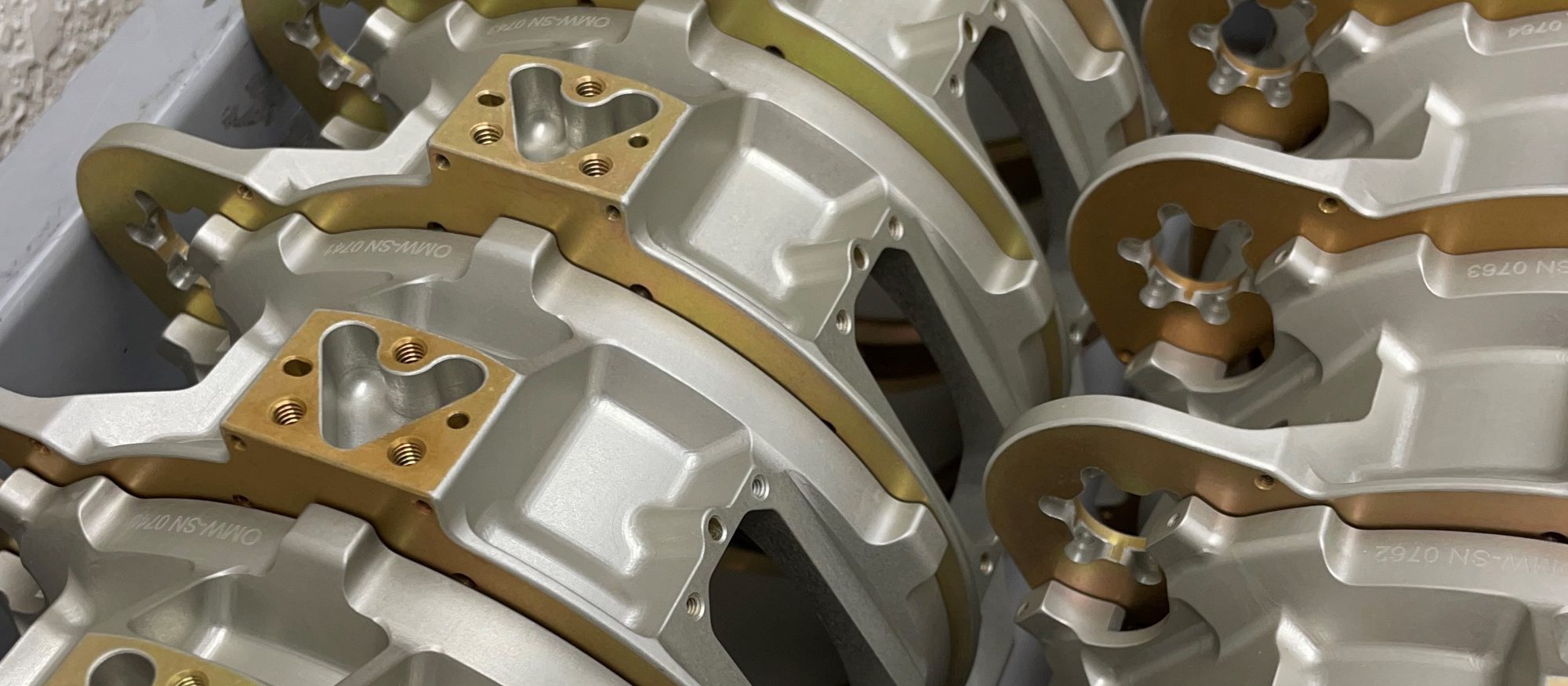
For aerospace and defense work, material certifications need to follow the material. When a certification is attached to a specific lot of material in Fulcrum, every job that consumes from that lot inherits the documentation automatically. For a shop where a single piece of material might feed multiple jobs across multiple customers, that inheritance removes a category of error entirely.
“Being able to attach a cert to a single piece of material, and having every job that consumes it inherit the certification automatically, is very useful.”
— Sean Thomson, Systems Administrator
OMW still builds on top of their data. Using Metabase and Power BI, the team has created dashboards that give them visibility the platform does not surface by default: what can be expected to ship between now and end of month, where jobs are in assembly relative to due dates, quoting results, and capacity projections through the next two to three years.
The difference is what those dashboards are built on. The WIP Tracker was built on manually updated Google Sheets. The dashboards today pull from structured operational data. The underlying record is reliable, and the team can build whatever view they need on top of it.
“There's so much tribal knowledge that just exists in the brains and hands of our guys on the shop floor. Being able to feed that data into the system in a relatively easy way means it understands our business processes better and can help us figure out the best way to do those. The more data you have living in your system that represents exactly how your shop works, the better.”
— Evan Parker, Master Scheduler
The Results
OMW has maintained a three-person documentation team through their growth period. The output from that team has increased significantly, because the work is done differently. There is less scanning, less manual typing, and fewer opportunities for errors in the documentation package. The team is completing more work per person, and the packages going to customers are more consistent.
“Our process has become much more automated. We're doing more work faster and there are fewer opportunities for human error. That's how you generate profits.”
— Mike Langston, President & COO
OMW has sustained on-time delivery rates in the 85 to 90 percent range through a period of significant growth and customer complexity. Maintaining those rates at $30 million in revenue, with 350 to 400 active jobs and a customer base that is constantly iterating on their own products, is a different challenge than maintaining them at $10 million.
OMW has risen to the occasion, with an operating margin improved three percent year over year as of April 2025. More parts through the shop, same team, better systems.
OMW shares data with their customers. It has been part of how they build trust with aerospace and space programs where schedule slips have downstream consequences. The manual systems made that sharing difficult and time-consuming. The current setup makes it faster and more accurate.
“Being open with our customers and honest about what is actually happening, and doing our best to give them correct and accurate projections, builds trust. Our systems need to serve that.”
— Sean Thomson, Systems Administrator
What Comes Next
OMW opened a second facility in 2024, about 15 miles from their main shop. A third is projected for 2028, with location decisions being shaped by proximity to customers. The new space market is their world, and their customers are expanding into it.
One of the consistent failure modes they have seen in other growing manufacturers is the proliferation of standalone systems at each location. The ability to run a multi-facility operation on one platform, with consistent data and shared visibility across sites, is a structural advantage that compounds as the company grows.
“The fact that we can use one system across an enterprise separated by thousands of miles is very attractive. We can keep expanding without having to have standalone systems at each site.”
— Mike Langston, President & COO
OMW's team has been building custom tools and data layers for years. As the platform's API and developer capabilities grow, their goal is to move more of that work inside the system rather than alongside it. Every custom dashboard or process they maintain outside the platform carries an infrastructure cost. The closer they can get to building within, the fewer side tools they have to maintain.
“Our customers are growing, their demand is consistently growing, and we have trouble quoting and entering all their orders. They're sending us revisions constantly. AI is going to be super helpful there — instead of manually going through and entering all of that, we can feed that data directly into Fulcrum. It's going to allow us to get higher customer satisfaction and make changes a lot faster.”
— Evan Parker, Master Scheduler
For a shop that has been building its own operational infrastructure since 2018, that kind of flexibility is not a nice-to-have. It is the difference between a vendor and a platform.