Thank you! Your submission has been received!
Oops! Something went wrong while submitting the form.
 Northeast Tool
Inside the systems overhaul conducted to plan to build a $100 million aerospace manufacturer.
Every department did its job well, but each handoff waited on a person to say the job was ready to move
Fulcrum in 2026, with AI-driven demand and purchase planning and hand-keyed, standardized item data
Quote to shipment in five days instead of four to six weeks, and four to five weeks of machine capacity reclaimed
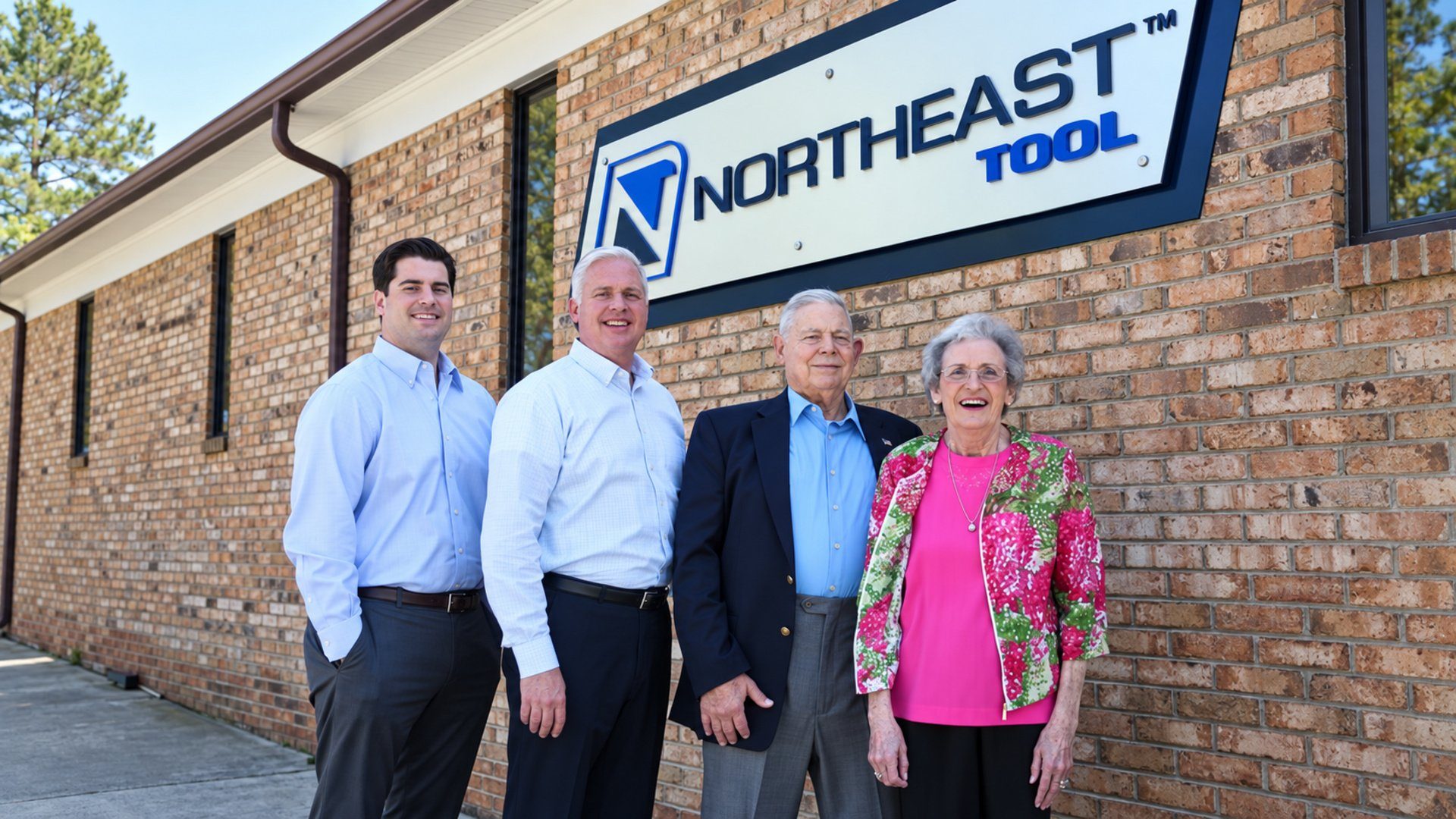
Northeast Tool & Manufacturing has spent six decades taking on the parts other shops turned down. Larry Arant started the company in the basement of his Charlotte home in 1964, with a lathe, a bench grinder, and a Rockwell mill. He built the business after losing his dominant arm in a car accident. He went door to door to local OEMs and took on the work nobody else wanted. Sixty-two years later, that same instinct toward hard-earned accomplishment is why Northeast Tool has grown into a precision manufacturer trusted with commercial aviation, military defense, and space hardware.
“We may not know how to make it today, but we're going to find a way to do it. We're going to put a lot of smart people together, build a process, and be successful. That's what makes us unique and has allowed us to grow.”
— Aaron Arant, Chief Operating Officer
Three years into an ERP search, it's also why the company chose to rebuild its operations on Fulcrum.
Before Fulcrum
For most of the last decade, Northeast Tool ran on Epicor. It wasn't a bad system on paper. Each department did its job well, but the problem was the handoffs in between.
A quote would come in, get won, and land with the sales team for contract review. From there it went to purchasing, who'd review the drawing for material and outsource requirements, loop in engineering, and place the order. Then someone would message engineering: your turn. Engineering would build the routing and bill of materials, then message manufacturing: your turn. Manufacturing would review and pass it to planning. Planning would schedule it and pass it to quality. At every handoff, the only way to know a job was ready to move was for a person to say so, usually over Microsoft Teams, sometimes by walking over to another department's desk.
“We just didn't have a lot of visibility. It was a constant communication gap that had to be driven pretty hard by myself and some of our other leadership team members just to get things moving.”
— Aaron Arant
The company had already digitized some of its processes with Epicor, moving off a legacy system in 2016. But digitizing the paper didn't fix the handoffs. Each department still had to be told, manually, that it was their turn.
The Solution
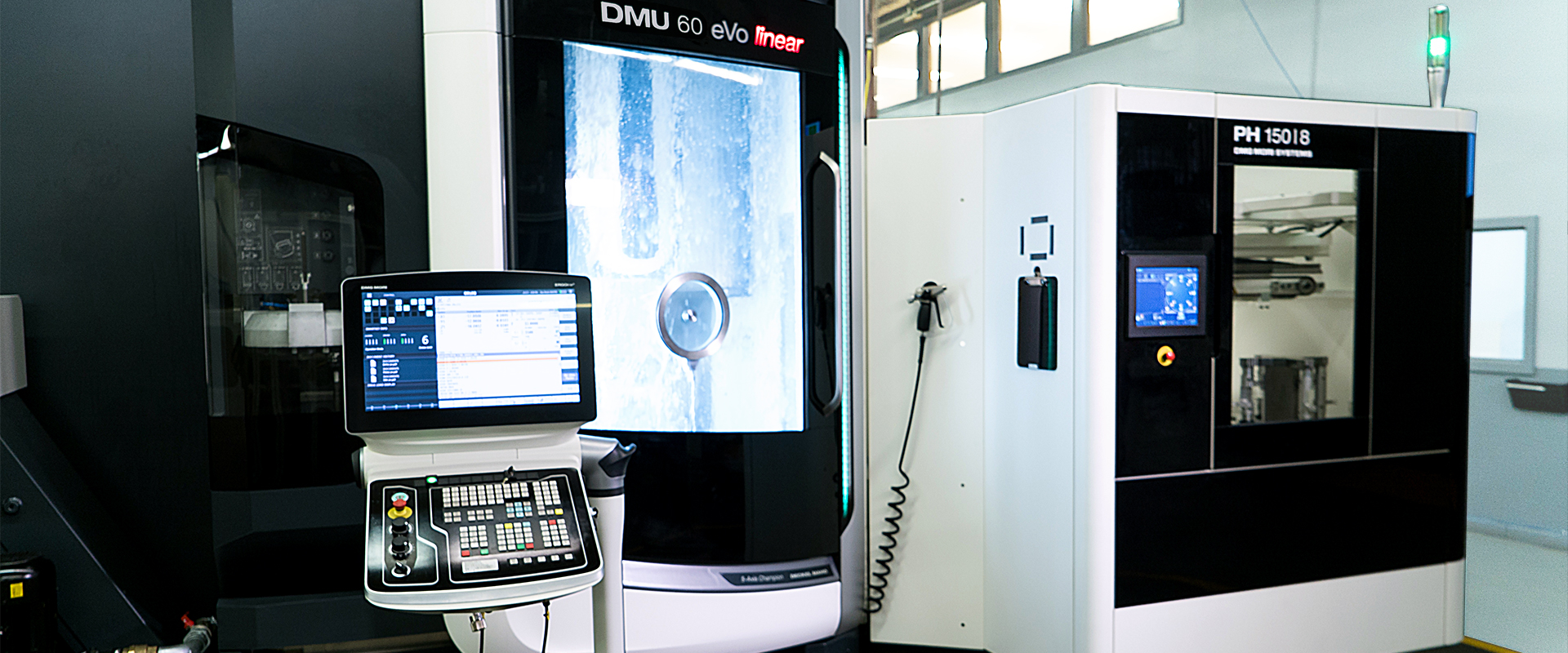
Northeast Tool moved to Fulcrum in 2026. The biggest shift? Status changes now show up automatically on the next department's dashboard, instead of waiting on a message or a walk across the shop.
“That communication gap has been eliminated. Now it's ‘here's your workflow, here's your dashboard, just continue to execute.’”
— Aaron Arant
The company has also leaned into Fulcrum's AI-driven demand and purchase planning. The system scans an incoming drawing, identifies the processes it calls for, checks them against approved vendors, and flags purchase orders before anyone has to go looking for the need. Writing a material or outsource PO that used to take Arant 15 to 20 minutes in Epicor now takes under two. The effect on headcount was direct.
“We downsized our purchasing department with Fulcrum. There was just no need for a large purchasing function.”
— Aaron Arant
The clearest proof point came on one of the company's first orders processed end to end in the new system. A job that would traditionally have taken four to six weeks, from quote to purchase order to shipment, was completed in five days. That speed doesn't just make customers happier. It changes what the shop can take on.
“Our machines that may have been scheduled for four to six weeks on this project, we're now completing in two to three days. We've got four to five weeks of extra capacity that we previously would have planned for in Epicor that we now have open.”
— Aaron Arant
For a shop actively chasing growth, that reclaimed capacity is inventory in a different form.
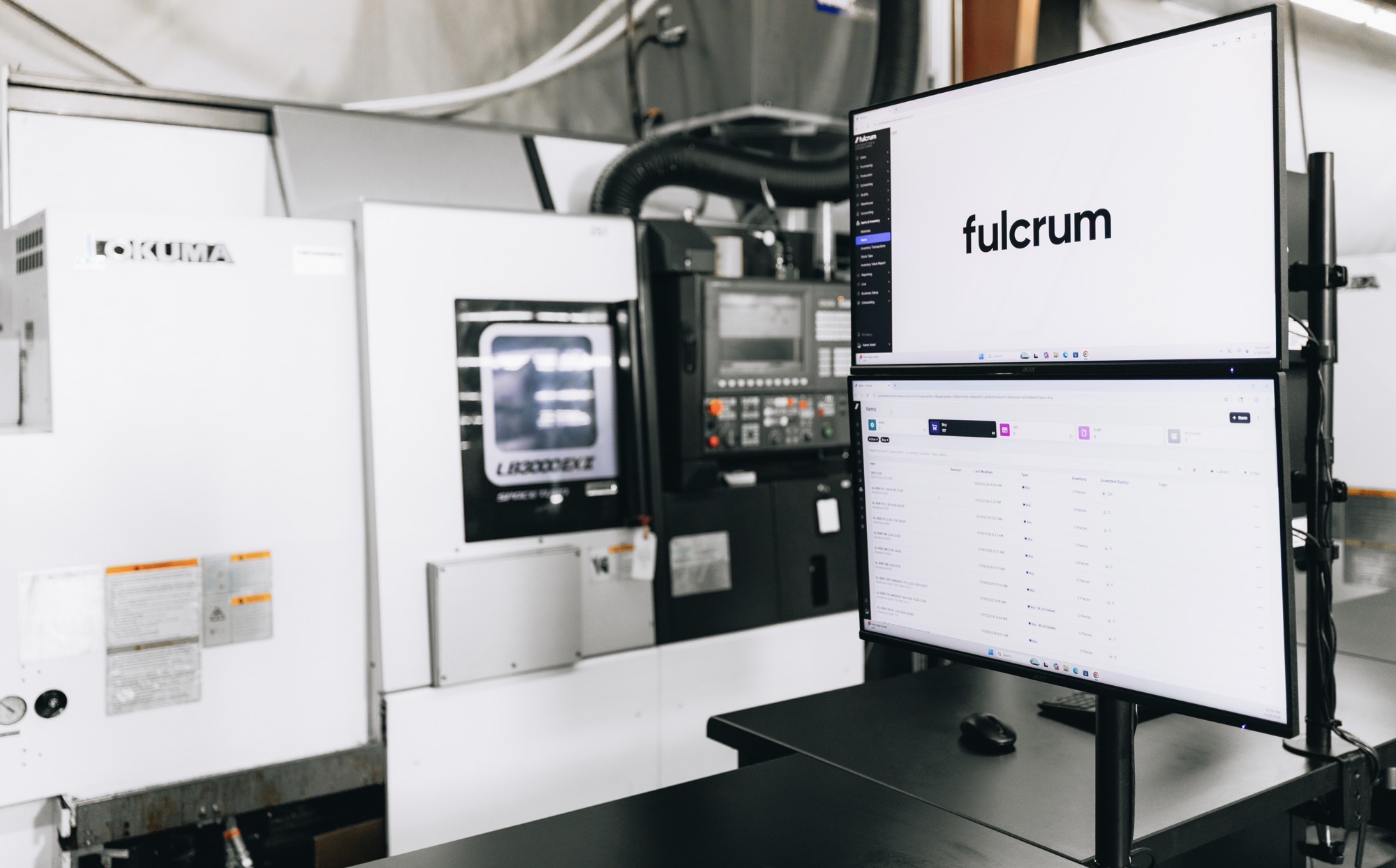
Northeast Tool has now run three different systems: a legacy paper process through 2016, Epicor from 2016 to 2026, and now Fulcrum. Along the way, the team learned a hard lesson about data.
“We thought we had pretty decent data in Epicor,” Arant said. “There were some things we knew were dirty, and we were okay with that.” Going into Fulcrum, the team decided they weren't going to be okay with that again. Rather than bulk-importing records from Epicor, they hand-keyed every item into the new system and built standardized naming conventions from scratch, material type, then grade, then specification, then size, so that a part like 6061 aluminum shows up identically whether it's on a bill of materials, a purchase order, or a quote.
“It sounds simple, but it was really a challenge for our team to be disciplined enough to do it for every single item,” Arant said. The payoff shows up in speed: nobody has to stop and ask what specification or size is behind a material code, because the answer is built into the name itself. “There's no second guessing. It's all right there.”
“They know the information is in front of them, they understand it, they can read it, and they can execute on it. Those simple, small things are what elevate us to move quicker.”
— Aaron Arant
The Results
Northeast Tool wasn't always this focused. For years, the shop served whatever RFQ came through the door, across industries, materials, and customer specs. That worked up to a point, but it also meant the business absorbed a lot of complexity for not much synergy.
Around five years ago, leadership made a deliberate call to concentrate on aerospace, serving commercial aviation, military defense, and space programs. That focus, paired with internal restructuring around clearer roles and accountability, is what helped the company achieve a tremendous lift in revenue. The ERP search, and the eventual move to Fulcrum, were essential to this growth. The old systems and processes had started to cap growth outright.
“We're constantly thinking about, as we make an ERP decision, does that support us where we are today and does it support us when we're $100 million? That was a huge decision for us, having that foresight and that vision.”
— Aaron Arant
That's the company's own ten-year target, set last October: build a $100 million aerospace manufacturer.
Growth at that pace requires people, and Northeast Tool's approach is to develop them alongside recruiting them. Through a partnership with Apprenticeship NC, the company has brought in roughly ten apprentices from a range of ages and backgrounds, including some who had never seen a CNC machine before. This investment in an apprenticeship program has been a longstanding family goal, one that Aaron grew up hearing his father talk about, and now he is able to actualize in his tenure as COO.
“This moment is especially meaningful to me because it brings my late grandfather's dream to life. When he founded Northeast Tool in 1964, he envisioned not only a way to provide for his family but also to create opportunities for the next generation of advanced manufacturing.”
— Aaron Arant
Aaron also understands that hiring today can require identifying skill sets that are resilient amid a rapidly evolving technological landscape.
“We're hiring process managers. We want people that can understand the process from our engineering team and execute on it. We don't need them to be thirty-year veterans.”
— Aaron Arant
That approach depends on the process itself being well documented and consistent, which is exactly what a structured system forces a shop to do. Without it, Arant said, scaling that way would be “kind of a pipe dream.”
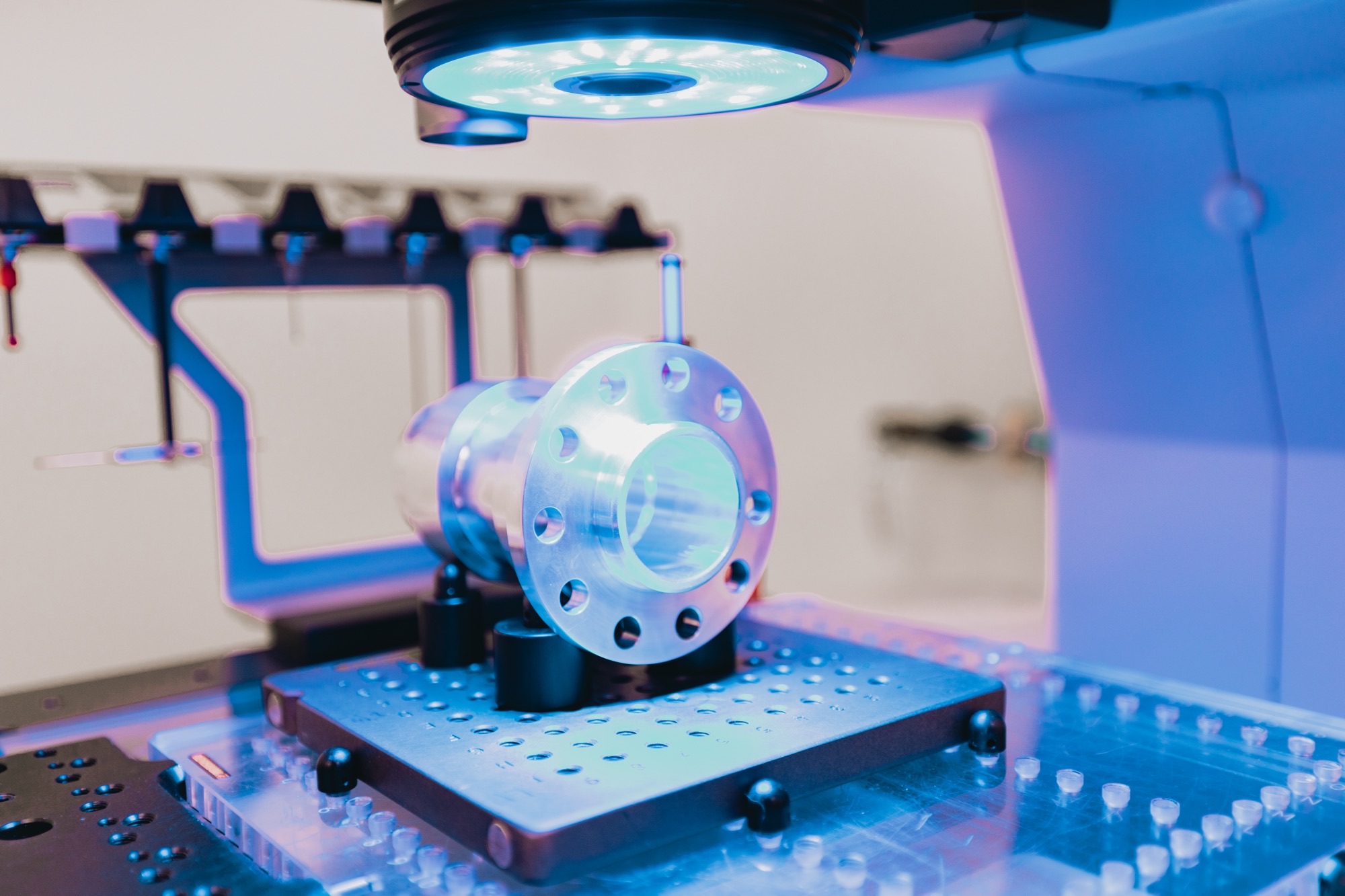
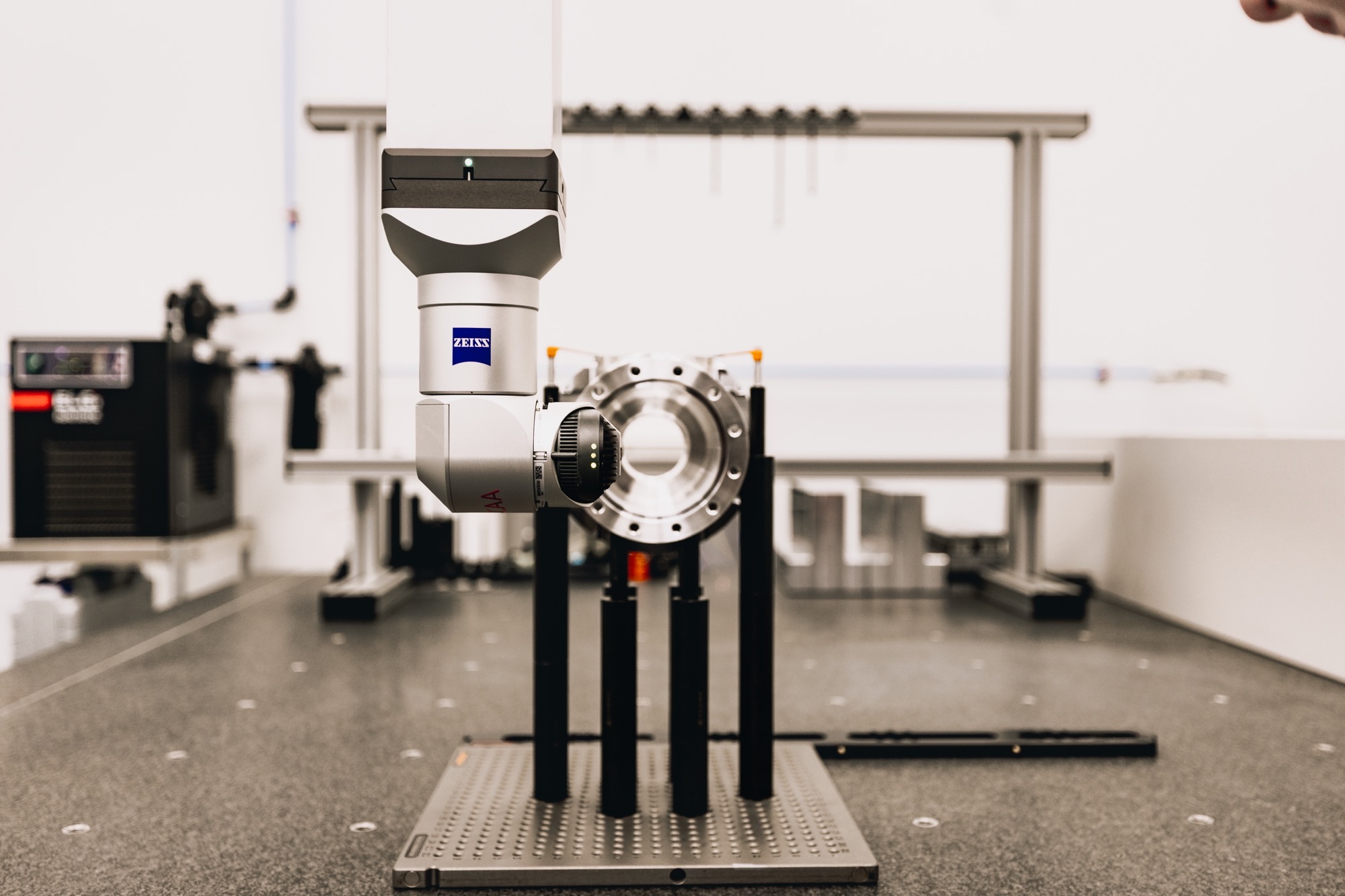
Northeast Tool holds AS9100, ISO 9001, ITAR certification, and is CMMC compliant, the standard set for a shop supplying defense and aerospace primes. Fulcrum has helped here too, mainly through faster reaction time. When an operator logs a measurement outside tolerance, the team is notified immediately, rather than finding out at the next quality review.
“They're all over it. They understand whether it's a tooling issue, a machine issue, a program issue, and they can react a lot quicker so small issues don't become large ones.”
— Aaron Arant
Arant was candid that the platform isn't a finished product for a shop at this level of compliance, and the Northeast Tool and Fulcrum teams are actively working through the remaining gaps together. When Northeast Tool identifies something the system needs to do better, Fulcrum is at the table working on it. It's an ongoing collaboration, not a closed case, and that responsiveness is part of what makes the partnership work.
What Comes Next
Sixty-two years after Larry Arant built a shop around parts other people couldn't make, Northeast Tool is applying the same instinct to its own operations: don't accept a process that's holding you back, and don't settle for data or documentation that's just good enough.

Northeast Tool & Manufacturing is a shop that quotes, wins, and ships an aerospace job in five days instead of six weeks. It's the same company that started in Larry's basement, now with the systems finally built to match its ambition.