Thank you! Your submission has been received!
Oops! Something went wrong while submitting the form.
 JADCO Manufacturing
JADCO Manufacturing on leaving a legacy system behind, betting on a platform that moves, and building certification and traceability into every job that leaves the shop.
A legacy system that had stopped growing, certification packages assembled by hand, and schedule answers that came from walking the floor
A year-long search down to two finalists, resolved in favor of the platform built for raw material — and the one that ships updates daily
Legacy data cleaned, teams trained on the questions they get asked every day, and cutover ahead. Results are the next chapter
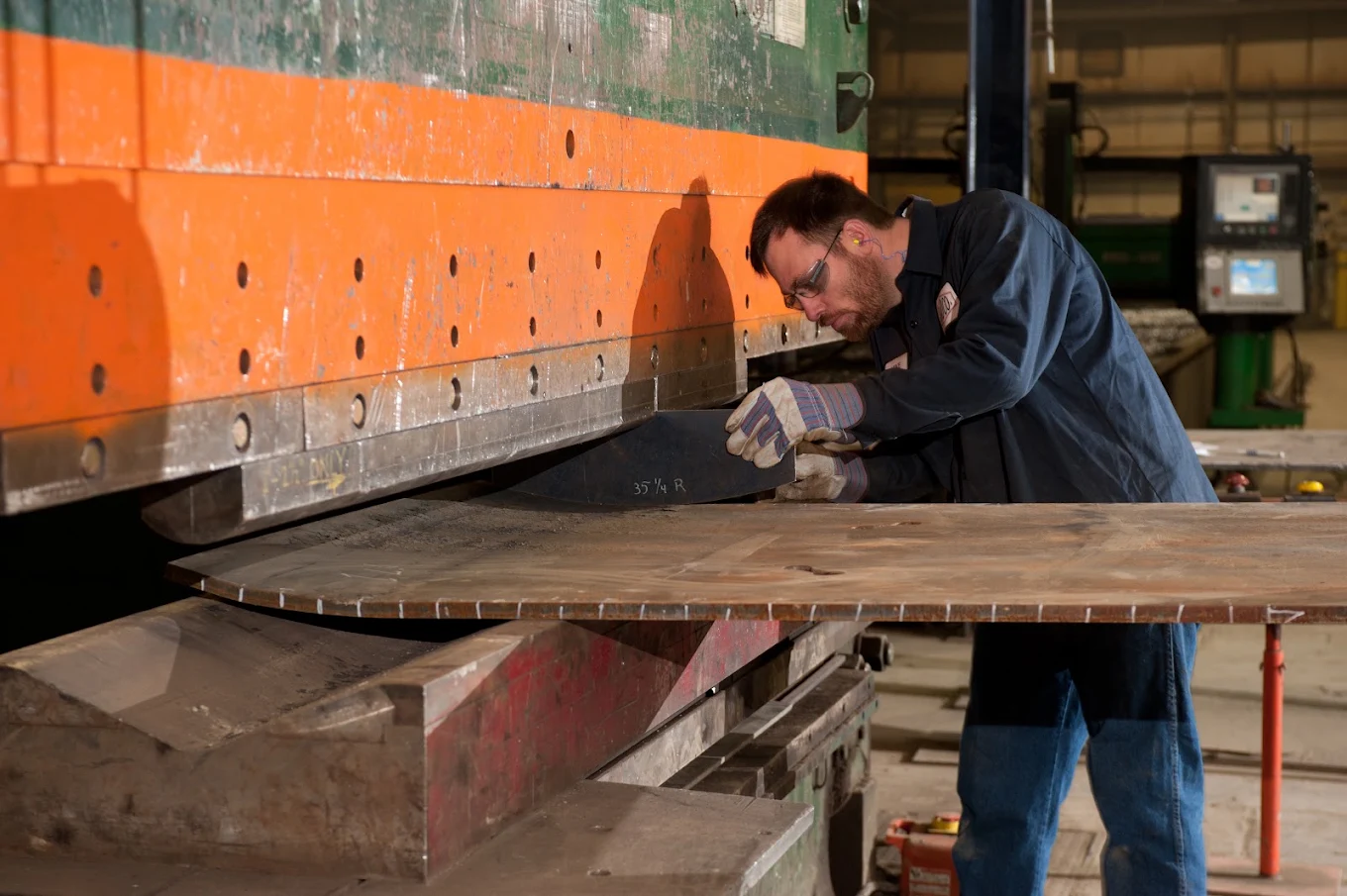
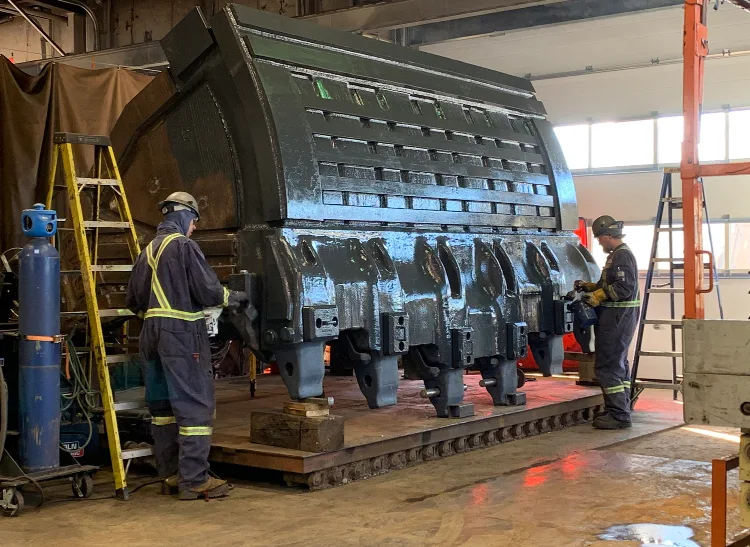
JADCO Manufacturing has been making wear-resistant steel solutions from Harmony, Pennsylvania since 1980. Their products go into some of the harshest operating environments in industry: mining equipment, cement plants, material handling systems, recycling facilities, and steel mills.
JADCO manufactures their own proprietary wear plate lines and takes on complex fabricated wear solutions that require full material traceability from raw steel through finished product. Their “Walk-Away Results” quality promise is a commitment that drives how every job moves through their shop.
Michael Lewis, JADCO's Vice President of Operations, has been investigating and moving toward better systems for years. That effort started with reaching the outer limits of everything JobBoss could do, pursuing a year-long platform search for a replacement, and has arrived at a Fulcrum implementation that is, in Michael's words, the price of being on the cutting edge.
Where They Started
JADCO had been running on JobBoss for years when the team started feeling the friction. The system worked, but it wasn't growing. After Michael and other team members first raised the idea of switching, there was pushback to stay with JobBoss longer. Leadership wanted to ensure they were utilizing JobBoss to its fullest extent before walking away.
This decision led JADCO to dig into JobBoss in ways they hadn't before: customizing reports, automating emails, building out their workflows. They were so comfortable using it that employees even embedded a Sasquatch into the corner of most of their reports, just for fun. The system became theirs.
“Our owner said, no, we're not using JobBoss to its fullest yet. At first we figured he just didn't want to spend money. But it was a blessing in disguise. It forced us to get creative, learn more about ERP systems, and really dive in.”
— Michael Lewis, VP of Operations
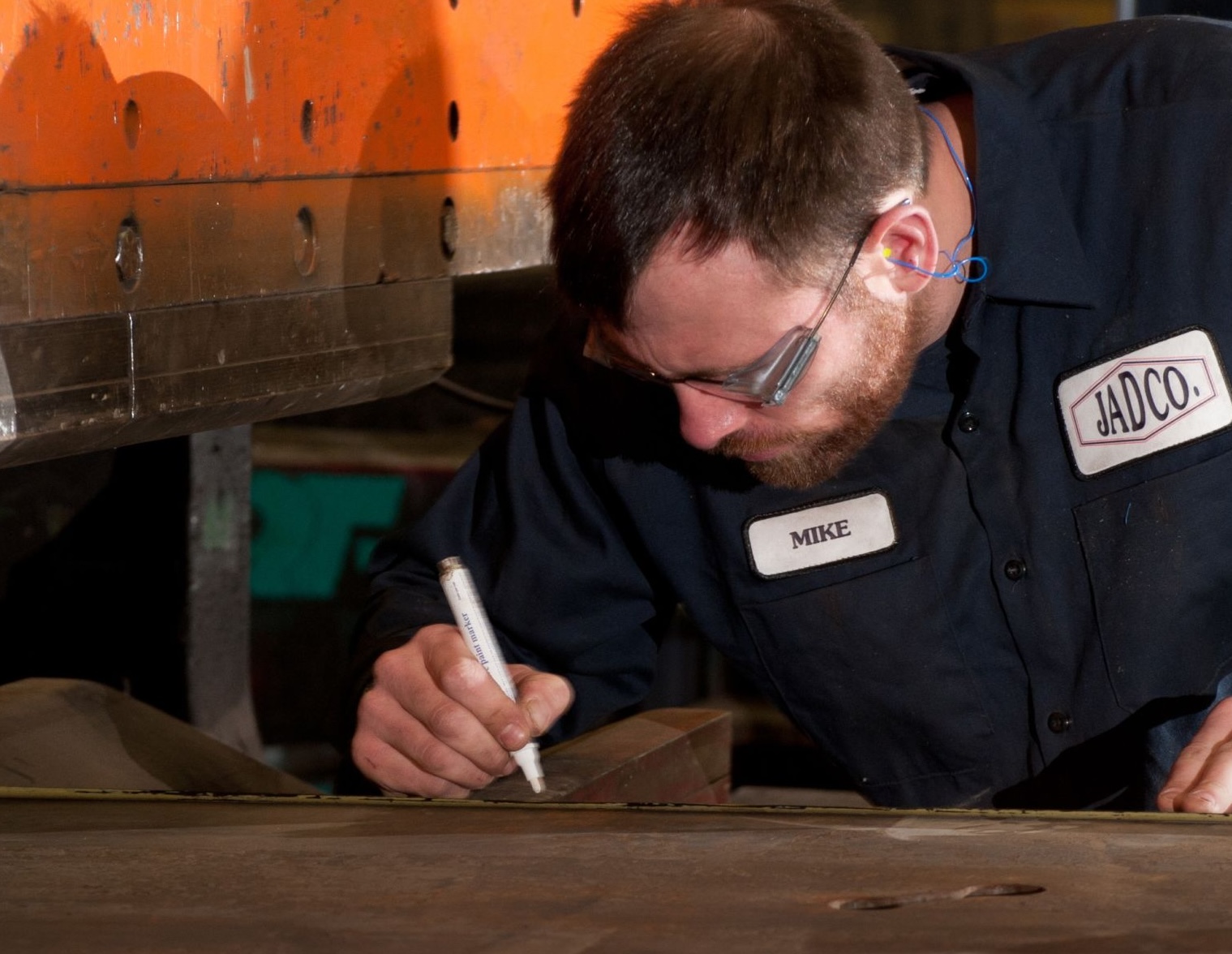
The paperless work that came out of that period helped too. Well before Fulcrum entered the picture, JADCO built a shop app through a platform called Jot Forms, digitizing safety forms, shipment documentation, and material transactions. The burn table operators, who had previously handwritten heat numbers and drop sizes on paper sheets that got collected every morning, moved to barcode scanning. One person's full-time job nearly disappeared and accuracy improved.
“Technology just makes things easier for people. And that's how you get buy-in, even from the older or tougher guys who are resistant to change. If you can show them it makes their life easier, they're all about it.”
— Michael Lewis

By the time JADCO started looking at new platforms, they weren't a company trying to figure out paperless for the first time. They had been running initiatives for years. That gave them a much clearer sense of what they needed next.
How JADCO Chose Fulcrum
The final push came from watching what JobBoss was becoming. E2, M2, JobBoss Squared — the products kept getting renamed and repackaged, but the development pace told the real story. At the JobBoss user conference, the ratio of salespeople to developers was not reassuring. Moving to their cloud platform would effectively mean implementing a new system from scratch anyway. If they had to make that change, they might as well find the right partner.
“Job Boss Squared was essentially a product from the 1980s with a new user interface slapped on. Their big release one year was expanding the job number field. We thought that was the coolest thing ever. Hold on. That's what we get excited about? The bar had been set so low.”
— Michael Lewis
The search took over a year and came down to two finalists: Acumatica and Fulcrum. Acumatica was established and proven, and it had real internal support at JADCO — one colleague spent the better part of an hour making the case that Fulcrum wasn't built yet. What kept pulling the decision back was a structural gap. Acumatica's roots are in wholesale distribution, and a shop whose entire business is raw steel, heat numbers, and remnants could see where that would break.
The team also worked through the comparison with an outside consultant, Jill Lippert of Dynamic Software International, who was deliberate about staying unbiased — clear about what Acumatica did well and clear about what Fulcrum did well, rather than steering the decision.
During the Acumatica demo, Michael noticed the sample data in the system had ship dates from 2016. A small detail, but a telling one.
“If that system is already 10 years old in the demo data, we're not getting up-to-date systems. We knew going in that Fulcrum was going to be bumpy. But if you want to be on the cutting edge, you have to bleed a little.”
— Michael Lewis, VP of Operations
What tipped the decision was the evidence that Fulcrum actually listened. During the evaluation and into implementation, JADCO's feedback on nest planning, purchasing, and materials has led to real changes in the product. Demand planning suggestions were incorporated. Nest planning was reshaped around how JADCO actually works, and a handful of their requests there are still open and in the queue. The experience of being heard on specific, operational requests from their own shop floor was something Acumatica's established status couldn't offer.
“You guys have done a tremendous job of listening to us. The nest planning was tailored dang near exactly to what we wanted. You can't make a 100% custom product for everybody, but you're incorporating our suggestions with others and rolling them out. That's so cool.”
— Michael Lewis
What JADCO Came to Solve
JADCO's “Walk-Away Results” promise lives or dies on material traceability. Every piece of wear plate that leaves their facility carries a history: what heat it came from, what job it went to, what remnants were cut and where those went next. Assembling certification packages for customers has historically been a labor-intensive process, pulling records together from across the shop.
Full traceability built into the job was non-negotiable for any platform JADCO considered. The ability to attach certifications to a specific lot of material and have that data follow every job that consumes from it, including remnants, was not a feature they were willing to build themselves.
“I couldn't even imagine how to build that into a system that didn't already have it. The ability to pull full traceability, and have it travel with the remnant, that was an awesome feature. Every certification package used to take 15 minutes to an hour and a half to pull together. That's going to change significantly.”
— Michael Lewis
The business case for Fulcrum that Michael keeps coming back to is scheduling. JADCO operates in a fast-paced market where customers don't place blanket orders weeks in advance. They call and ask if JADCO can hit a deadline this weekend. Historically, the answer to that question has come from walking the shop floor and reading the situation. It works, but it leaves margin on the table.
“A customer calls and says, can we get this out in two and a half weeks? And we say, no, we think we're about four weeks out. But really, you could squeeze it through. You just don't know you can. We turn away orders because of that.”
— Michael Lewis
The goal is, ultimately, to run the shop with better information. When a rush job comes in, Michael wants to see immediately what moving it to the front means for everything else in the queue. That visibility is what Fulcrum's scheduling is built to provide, and it is the capability JADCO is most focused on proving out as they go live.
How JADCO Got Ready to Go Live
One of the less glamorous parts of any platform migration is deciding what to bring with you. JADCO had years of data in JobBoss, including a lot of accumulated workarounds: phantom jobs used in place of individual assemblies, item names that couldn't be changed without deleting and recreating records, legacy entries that made sense when the company was smaller and just never got cleaned up.
The forced period of using JobBoss more deeply had at least made that debt visible. The migration to Fulcrum became an opportunity to shed it.
Michael's approach to preparing the team has been to start with the questions they already get every day. What are inside sales asked constantly? When is my order going to ship? Do we have material to hit this date? If those questions can be answered directly in Fulcrum, the adoption case is already made. The work is connecting the question to the tool, not convincing people the tool is worth using.
“We've been telling everybody: what are the most common questions you get asked every day? Those are the questions we need to figure out how to answer in Fulcrum. Because if we can answer those, everyone will use it.”
— Michael Lewis
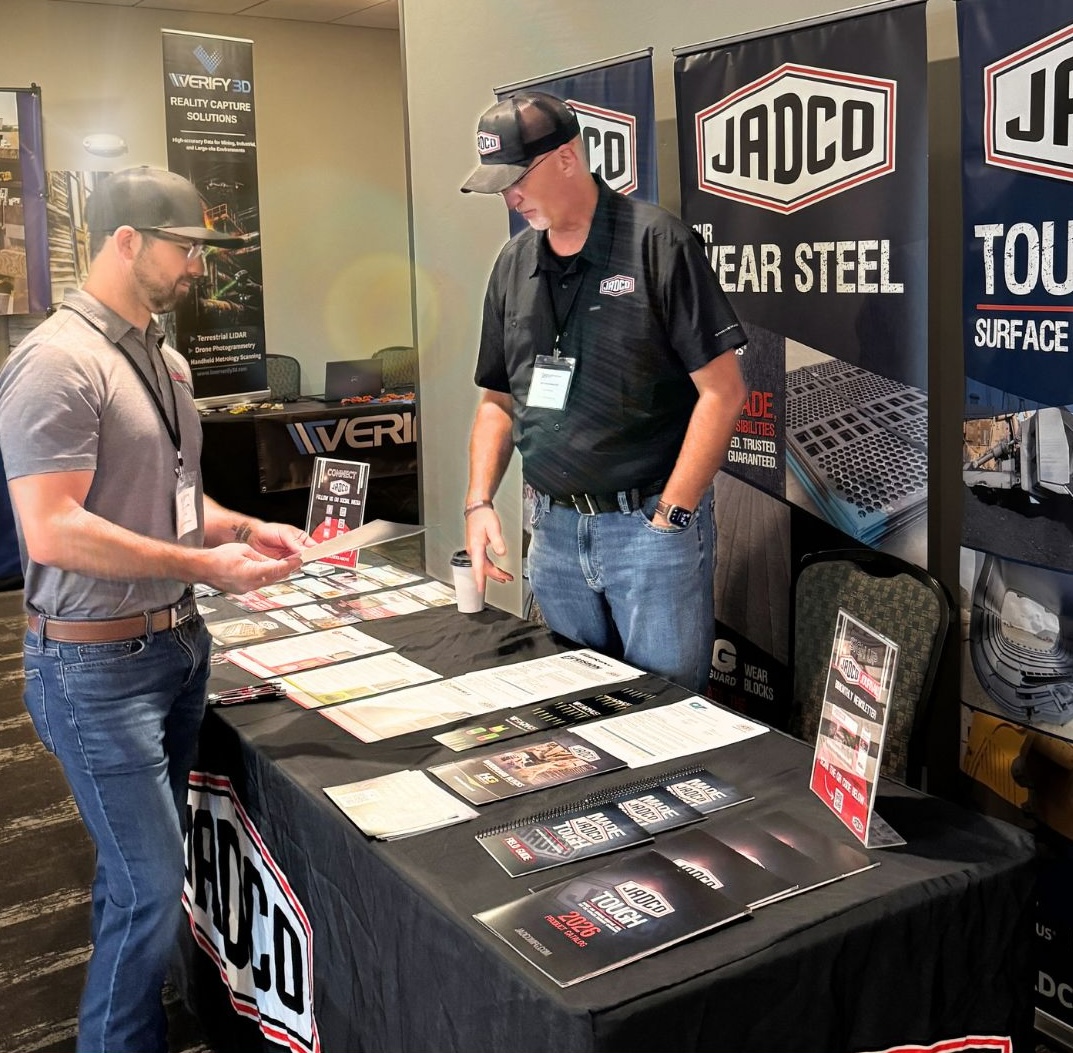
JADCO is part of a Pittsburgh-area manufacturing leadership group that meets every other month to talk through shared challenges. ERPs and AI come up constantly. Through that network, Michael connected with other Fulcrum customers in the region — Westmoreland Steel and Fabrication, live on Fulcrum in Madison, PA since 2024, and EH Schwab, who are going live right around the same time as JADCO.
Michael's vision for that network is practical: go visit, see how another shop sets up their dashboards, look at how they handle material transactions, compare what their labels look like. The details other shops have already figured out are exactly the kind of institutional knowledge that usually takes months of trial and error to develop.
“I learn by doing and seeing. Going to a shop and seeing how they run their dashboards, how they transact materials, what their labels look like. People always think change means getting a whole new system. No. Sometimes just changing a label from 2D to 3D makes everything easier. You pick that up when you visit another shop.”
— Michael Lewis
He's also thinking about what that network could become. JADCO is already building custom tools using Fulcrum's open API, including a live dashboard to help the team pick and pull orders without duplicating work across shifts. Michael's observation from that process is that there are probably three other Fulcrum customers who have already solved the same problem. The faster that knowledge gets shared, the less everyone has to reinvent.
The Partnership
The relationship he describes is one where honest feedback goes somewhere. When JADCO raises a problem, the response is not a support ticket and a wait. It's a conversation. And when the conversation produces a change in the product, that change shows up for every other customer too. That's the version of a vendor relationship Michael was looking for.
The alternative is a static system with a customer support line. JADCO has been there.
“Fulcrum is a bunch of dorks. And I mean that in the best way. I expected computer geeks. Instead, everyone is a real person you can actually have a conversation with. You're not wearing suits and ties. Joe's eating a beef stick during the presentation. That makes honest communication a lot easier, and that's how you actually improve a system.”
— Michael Lewis, VP of Operations