
Product Updates
Weekly updates to Fulcrum, always included with your subscription.
Thank you! Your submission has been received!
Oops! Something went wrong while submitting the form.

You can now create a vendor credit as soon as a purchase order is Ordered, instead of waiting until it's Paid — matching how you can already log an order issue. No more waiting on a bill to be paid before acting on a vendor problem.
Ship Via on a purchase order is now a picker of your own shipping methods, not just the vendor's configured accounts — so if you just want to say "Our Truck," you don't have to set that up on every vendor first. A separate Shipping Account field sits right beside it, auto-filled from the vendor's matching account or typed in by hand, and a new prompt lets you save that arrangement back to the vendor when you want to.

Quote PDFs can now hide the grand total while still showing line-item pricing at different quantities — handy when you want the customer focused on picking a quantity and price without a bottom-line number anchoring the conversation. It sits right alongside the existing itemized-pricing option.
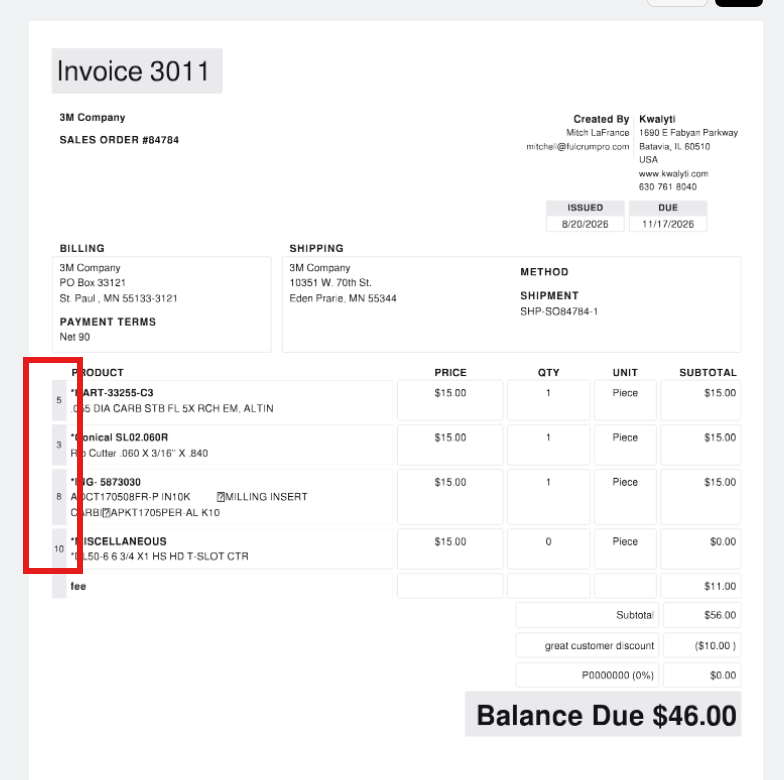
Invoices can now show the original sales order line's number instead of renumbering every invoice back to 1, 2, 3. So a partial invoice covering sales order lines 3, 5, and 8 shows exactly that: 3, 5, 8, on screen, on the PDF, and when adding lines from the sales order. It's a simple option to turn on, and it matches how packing slips already work.
 Share ->
Until now, a browser only picked up a new version when someone refreshed it — and shop-floor apps can stay open for weeks, missing updates in the meantime. Releases now reach the whole fleet within hours, with no interruption to work.
Raw HTML in a PDF's custom text or legalese used to render a link — but that trick only worked on quotes and sales orders. Now you can add a link without any HTML on any of Fulcrum's PDFs, from System Data → PDFs and Email.

Deposits weren't previously compatible with the Xero integration. Now final invoices send through offsetting deposit line items, so Xero users can use deposits without manual adjustments — fewer clicks for your accounting team.

Unit conversions are now available when bubbling drawings. Set a "Drawing Unit" and a "Recording Unit" — drawings get bubbled in their own units and values, while operators can record values in a different unit. For example: bubble a feature at 20mm ± 0.5mm with the Drawing Unit set to millimeters, set the Recording Unit to inches, and the operator sees 0.787 inches in the job tracker when recording data.
Certifications could previously only be assigned to lots when the item was a material, or when the outside process was the final step on the part. Now, when the outside process isn't the final operation, you can attach the cert to the job instead, so it follows any lot numbers created from that job later.
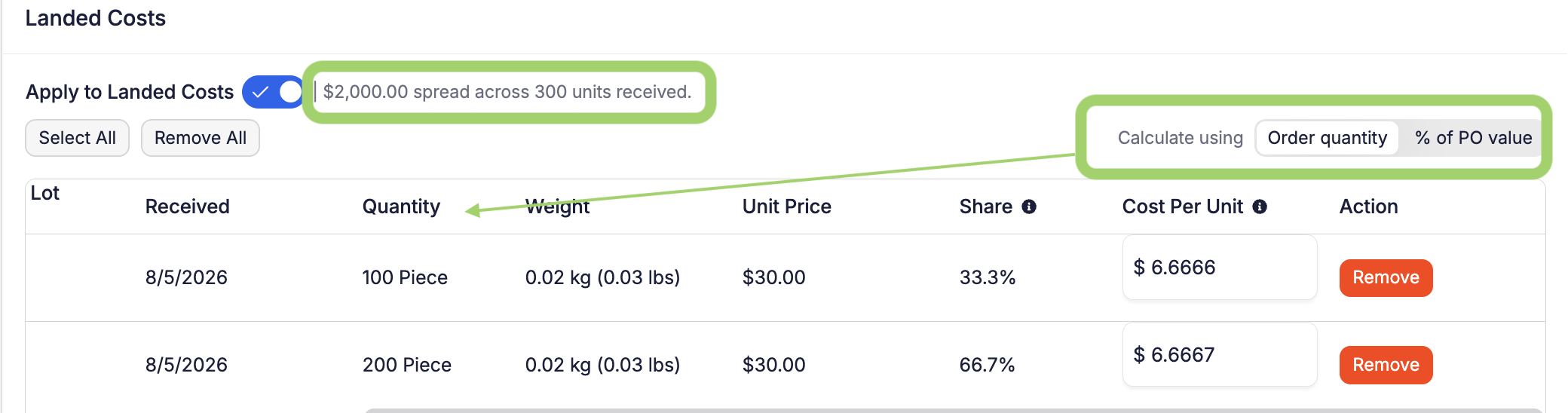
Landed cost auto-calculation used to spread fees evenly across every unit received. That works fine when items on a PO are similarly priced, but it can badly skew costs on mixed shipments — a $16,000 freight and duty bill spread across 16,500 items adds about $0.97 to every unit, whether that unit cost $2 or $200. Lower-cost parts end up over-costed while higher-cost parts get under-costed, throwing off inventory value and margin.
You can now choose how a landed-cost fee gets allocated. On a purchase order's landed-cost panel, "Calculate using" offers two options:
A few guardrails:
 Share ->
On the receiving page, long item names were getting cut off on smaller screens like tablets. Names now wrap instead, so the full name is always readable.
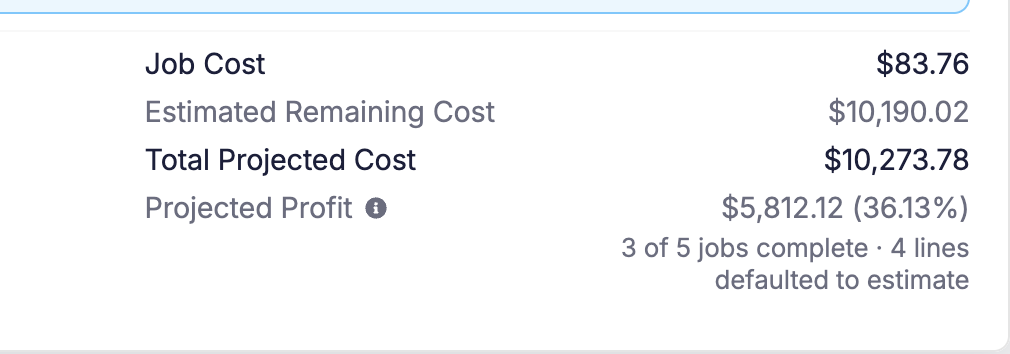
Today the Profit figure on a Sales Order is an estimate — it uses the cost each line was quoted at, back when the order was written. Underneath it, the Associated Jobs panel shows what each job really cost, but nothing adds those up. So the page tells you what you expected to make on the whole order, and never what you actually made on it.
The Associated Jobs panel now totals your real job costs and shows actual profit and margin, sitting right under the estimate so you can compare the two at a glance.
Rolling out over the next few weeks — if you don't see it on your Sales Orders yet, it's coming.
 Share ->
Archie can now set a due date when adding a sales order line, and change the due date, description, or internal notes on an existing line — the same thing you could already do everywhere else in Fulcrum.

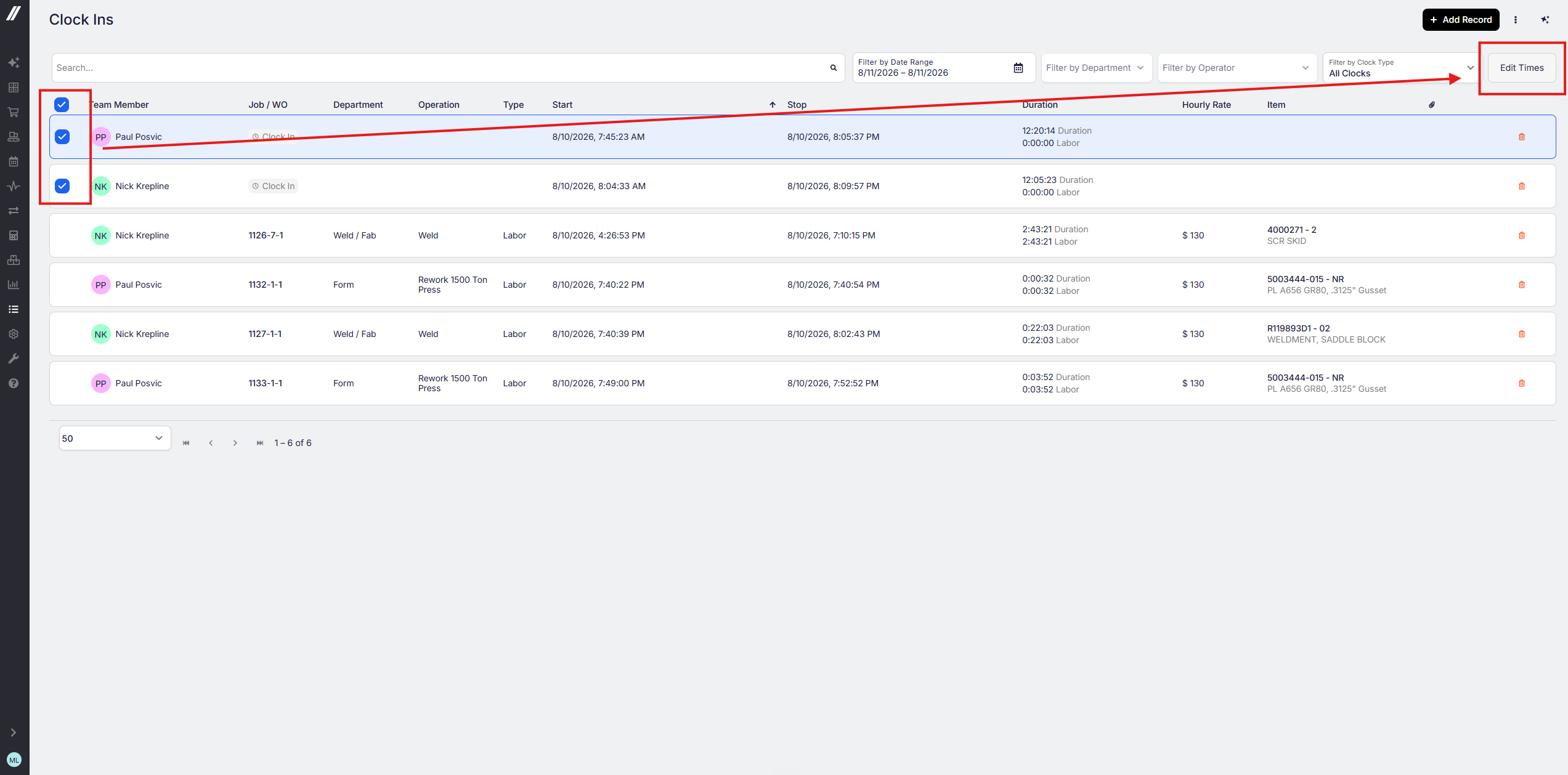
Supervisors and managers can now select and edit multiple daily clock-ins at once on the Time Management grid, instead of editing them one at a time. This is rolling out gradually.
 Share ->
The Public API already returned an item's quality plan status (Needs Approval / Approved), but not whether the item requires a quality plan at all. Integrations can now read that flag directly, so they can tell "approved" apart from "doesn't need one" without guessing.


