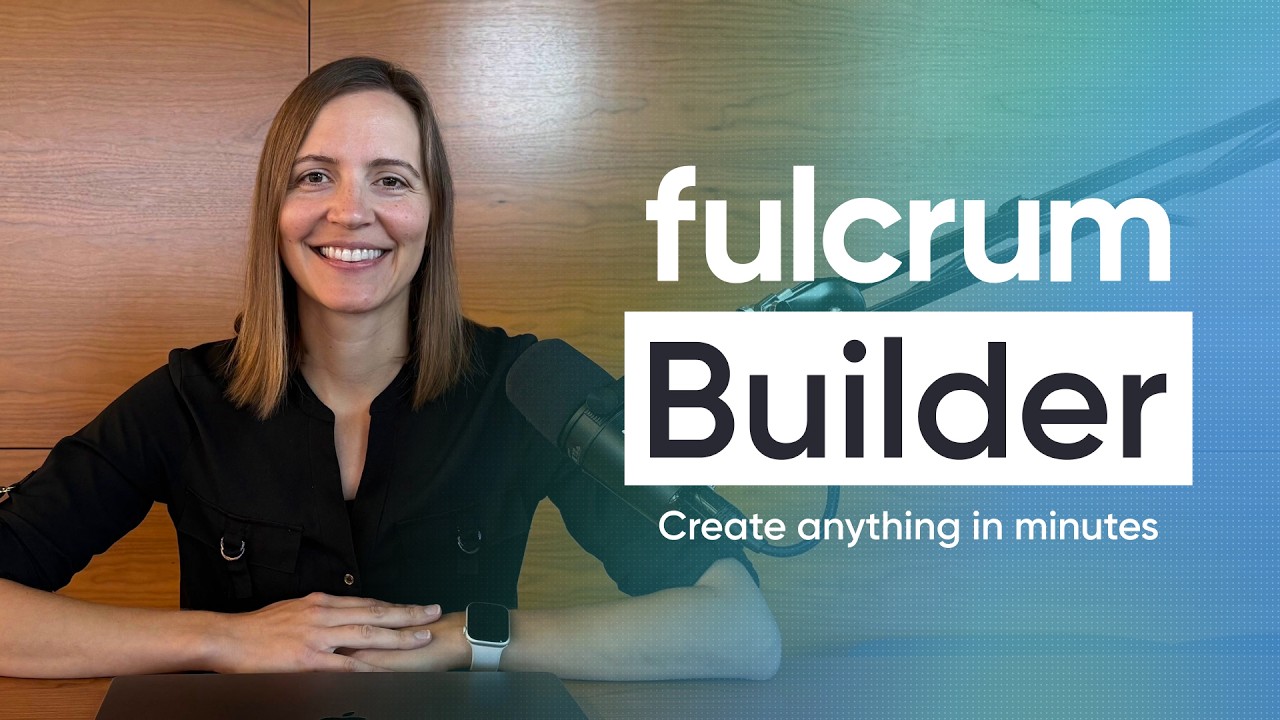
Connect 2026: Fulcrum Customers are Building Their Own Software

Last week we hosted Connect 2026, our third annual user conference, and it exceeded every expectation. Shops from across the country came together for hands-on sessions and honest conversations that changed how we think about the future of manufacturing technology.
The purpose of coming together like this is twofold. We want to learn from our customers, and we want to be open about exactly where we are as a company. The Connect conference is designed to learn from the network of manufacturers Fulcrum serves and to information-share in both directions. Here's a thorough recap of what happened.
A Room Full of the Right People
What made Connect 2026 special was our users. Owners, operators, estimators, production managers, and shop floor leads from dozens of job shops sat side by side and talked openly about what's working, what isn't, and where they want to go. That kind of candor is rare in manufacturing, and we don’t take it for granted.
We also used the opening to be honest about ourselves. Fulcrum CEO and founder Sunny Han committed to four things at last year's event: performance, polish, new AI features, and building more of the manufacturing network. Performance was delivered. Traffic on Fulcrum is up 74% year over year, and despite that increased load, slow requests are way down. On polish, the team addressed about 10% of what was in the bucket. That's not enough, and Sunny said so plainly.
Everything We've Built Is Already Obsolete
The production value flowing through shops on Fulcrum has grown from $1.5 billion to $3.9 billion annualized in the past year. That's a meaningful indicator of what our customers are accomplishing with the platform. But the bigger point was about what's changing underneath all of it.
Fulcrum now has fewer engineers than it did last year and is shipping nearly three times as much. The majority of code going into Fulcrum today is written by AI and supervised by humans, not the other way around. The team built the first version of our quality management system in 18 days. What would have taken two years of traditional software development took three weeks using internal AI agents.
The analogy Sunny used that stuck with the room: what's possible today makes Fulcrum look the way Fulcrum makes JobBoss look. That's not a comfortable thing to say about your own product. Still, it’s what Sunny told the room because the pace of what's coming is unlike anything Fulcrum has delivered before.
On day two, Sunny went further. A customer asked whether foundation models getting smarter would eventually make Fulcrum irrelevant. The answer was direct: Fulcrum has never believed that the software it writes is its primary advantage. The advantage is going on-site, understanding what's actually happening inside the four walls of your shop, and translating that into technology. If building software becomes essentially free, that just means more resources go toward the first part of the process, the part that requires actually understanding your business. The shops in the room are living proof. The ability to turn drawings into G-code, and G-code into unattended parts, hasn't made them irrelevant. The expertise is the value. That relationship holds.
The Second Spec
There's a concept that kept surfacing across the keynote and the roundtables. It’s the idea that every part you make has two specs. The first is on the drawing: the material, the finish, the tolerances. The second exists only in your shop's collective memory. It's the note that says don't run this material too fast or it work-hardens. It's the 250-email thread between a shop and their aerospace customer that documents a very specific powder coat specification that doesn't appear on any drawing and isn't held by anyone who still works at either company.
That second spec is your life's work. It's also almost entirely uncaptured by any software that has ever existed. The reason this moment in technology matters so much is that for the first time, the systems exist to actually engage with that knowledge. Not just store it, but use it. Every chat message, every traveler note, every flagged job, every correction an estimator makes to a draft quote is training data for an apprentice that never forgets and gets better every month.
That's how Sunny asked customers to think about AI at Connect. Not as a reporting tool or a feature, but as the smartest new hire you've ever brought on who happens to read every drawing, remember every job, and get exponentially more useful the more your team communicates inside the system.
On day two, a customer asked concretely: how do I actually start capturing tribal knowledge? Sunny's answer was practical. Start with chat. Several Fulcrum customers are already putting photos, documents, and snippets of shop floor context into job chats in real time, and that information is readable by AI today. Upload the word documents and Excel sheets that only live on one person's computer. Storage is cheap; Fulcrum gives every customer multiple terabytes. Take pictures from tablets directly into the chat screen. The goal isn't a perfect structure. The goal is to get the information inside the system at all, because once it's in there, it can be reorganized, searched, and eventually surfaced by Archie in ways that aren't possible yet but are coming fast. Sunny also shared that eight customers are already in a beta where Fulcrum has single sign-on access to their email inboxes, pulling that context in automatically. That's the direction the whole platform is heading.
The CoC That Changed the Math
Scott Hartrick from Dynamic Metal joined the stage on day one to talk through what happened when the Fulcrum team spent two days at his shop about a month before Connect.
Dynamic Metal does significant work for an aerospace customer, and that customer recently required an electronic certificate of conformance for every single part they make, whether it's a flight part or a tooling part. That change took Scott's team from generating a small number of E-certs to 50 or 60 per day, all of them manually created. One transposed character, one wrong number, and the cert gets rejected. A rejection hits their quality score, and the quality score affects their ability to quote new work. The whole chain breaks from one typo.
The Fulcrum team went on site, watched how the certs were actually built, understood what information had to be pulled together from outside processors, purchase orders, and picked materials, and then built a tool to generate those documents automatically. Emily Saunders, a Fulcrum Product Designer, vibe coded a working version the afternoon of the second day. A few weeks of engineering review to get it into production code, and Scott's team now runs at 80 to 90 percent automation on a process that was 100 percent manual before.
"It's about 80 to 90 percent of the way there, which is 100 percent better than what we were manually doing." — SCOTT HARTRICK, DYNAMIC METAL
The cost to deliver that in the old model of software development would have been a multi-month engagement with an outside developer. The cost in the new model was two days of a product person's time and a few hours of vibe coding. On day two, Sunny put a number on what that shift actually means: a company receiving that kind of custom software in this model gets what would otherwise cost half a million to a million dollars in custom development, for maybe a few thousand dollars in hosting per year and some token costs. That changes the math on what's economically possible for every shop in the network.
Archie Takes Center Stage
The sessions around Archie, our AI agent embedded directly in Fulcrum, were some of the most electric moments across both days. In multiple "Meet Archie" breakouts, customers got hands-on time asking real questions from their own shops, and the results were eye-opening.
Customers discovered that Archie could surface jobs at risk of being late, pull invoice totals, identify open jobs that had been lingering far too long, and help think through margin analysis in ways that used to require hours of manual reporting. One attendee found an entire batch of jobs that should have been closed out the previous year, surfaced in seconds.
"I want my employees to ask Archie why something isn't working, and have Archie say, it's not me, it's you, but let me walk you through how to do it the right way." —DENNIS GAPP, ROTHER MACHINE
That captures something heard in many different forms throughout the conference. Customers want Archie to be more than a reporting tool. They want it to be a real partner on the shop floor, one that surfaces tribal knowledge, guides new operators, alerts teams to problems before they compound, and eventually takes action rather than just answering questions.
We also received live feedback about where Archie falls short today. Inventory queries were hit or miss. Some complex questions timed out. Phrasing the same question two different ways could yield very different results. Rather than glossing over those gaps, our teams documented every single one as training data to improve Archie’s accuracy. Customer feedback directly shapes how we build every tool in Fulcrum.
On day two, Sunny addressed the question of how long Archie stays in beta and whether it will cost more. The honest answer is that Fulcrum's token costs went from $500 a month a year ago to a projected $150,000 next month as usage grows. The goal is to find a model that doesn't feel like nickel-and-diming, but the team needs to recover those costs somehow. The timeline for Archie being significantly smarter, and having write access to take real action in Fulcrum, is three to six months. Both problems are being worked on simultaneously.
Vibe Coding: The Session Nobody Wanted to Leave
If there was one session that shifted something for people across both days, it was the Vibe Coding Lab. For many attendees, walking in, they'd never heard the term. Walking out, they were already thinking about what they wanted to build.
The team walked through how to use Fulcrum's public API and MCP server alongside AI tools like Claude Code to build live, working dashboards from scratch, in the room, in under 30 minutes. One demo produced a fully functional on-time delivery dashboard pulling live data across hundreds of jobs, complete with distribution charts and sortable tables. The cost in API tokens: roughly $11.
The point wasn't to turn shop owners into software engineers. It was to show that they don't have to be. Anyone who's ever opened a spreadsheet to solve a problem can now build production-ready tools, and that changes everything about what's possible for your business.
Customers built prototypes on the spot. Jason at Stainless Works and Metalfab Group started thinking through an automated PO follow-up tool that would email vendors asking for status updates on outstanding orders. Kyle at Bettis Fabrication sketched out a laser priority dashboard letting operators see exactly what's queued for the day without digging through job tracking screens. Steve at E.H. Schwab envisioned a change order digest tool that could automatically parse customer spreadsheets and update the relevant jobs.
One of the most candid moments came from a customer who realized partway through the session that he'd already been vibe coding for months, using AI to reformat Fulcrum reports into what he needed for payroll. He just hadn't known that's what it was called.
On day two, Sunny addressed the question of where to build and how to stay safe doing it. For tools that are personal to one person, the simplest answer is to build locally. Every modern computer can run a web server. Claude can spin one up without any infrastructure knowledge required. The tool can still pull live data from Fulcrum, still run reports and create outputs, and it just lives on your machine. For anything that needs to be shared across a team, the next step is hosted infrastructure, which is exactly what Fulcrum is building the environment to support (coming soon!). Security concerns around ITAR and CMMC requirements were addressed directly: that's precisely why Fulcrum is building a contained environment rather than asking customers to figure out compliance and cost on their own.
Where We Go From Here
Sunny laid out a network vision across both days. It goes, essentially, like this:
Boeing makes $66 billion in revenue. They spend $48 billion of it buying components, and their gross margins are lower than the net margins of many shops that were in the room. The supply chain they run is filled with aggregators and intermediaries, including companies that have said plainly on earnings calls that their 40 percent margin on top of what they pay shops is protected because shops like yours can't integrate modern technology efficiently enough to be discovered and worked with directly. Sunny has spent nearly two decades visiting shops and every single visit has deepened his conviction that view is wrong.
Rather than Fulcrum becoming a portal into Boeing or SpaceX, the direction is the inverse: making your capacity, your accuracy, and your expertise visible and legible to the OEMs and large vendors who want to find manufacturers like you.
The takeaway that kept coming back across every session comes down to one thing. The shops that will win with this technology are the ones making their expertise legible. Clean job tracking data, notes in the system, corrections fed back to estimators, tribal knowledge captured in chat rather than kept in someone's head. You don't have to buy new software or hire an IT person to start. You just have to make your shop more readable to the systems that are already learning from it.
We came into Connect 2026 hoping to learn more than we taught. That's exactly what happened. Every session, every question, every moment of frustration or excitement has been documented and is already informing what gets built next.
Thank you to every customer who showed up, asked hard questions, and trusted us with your time. You made it worth it.

Transcript
Ready to See What's Possible?
We're launching a new tool to vibe code custom interfaces in Fulcrum — hands-on, no coding experience required. If you'd like to join an upcoming session, sign up here. If you're a current Fulcrum customer curious about what Archie and the MCP can do for your shop, let us show you firsthand.